
Get 20% Off On First Visit
Discover Our Latest Specials
Serving Arlington & Colleyville
GIVE $50. GET $50. GLOW TOGETHER.
Top

RF Microneedling for Acne Scars: What Arlington Patients Can Expect

Acne scars can remain long after active breakouts have disappeared, affecting skin texture, smoothness, and confidence. While topical skincare can help improve certain concerns, deeper or depressed acne scars often require professional treatments that stimulate collagen remodeling.

RF microneedling for acne scars combines the controlled micro-injuries of traditional microneedling with radiofrequency energy delivered into targeted layers of the skin. This combination is designed to stimulate collagen and elastin production while gradually improving the appearance and texture of acne scars. The American Academy of Dermatology recognizes radiofrequency microneedling as one of the treatment options that may make acne scars less noticeable.

Glo & Glam offers VirtueRF microneedling in Arlington and Colleyville, with customizable treatment settings based on the patient’s skin, treatment area, and goals.

What Is RF Microneedling?

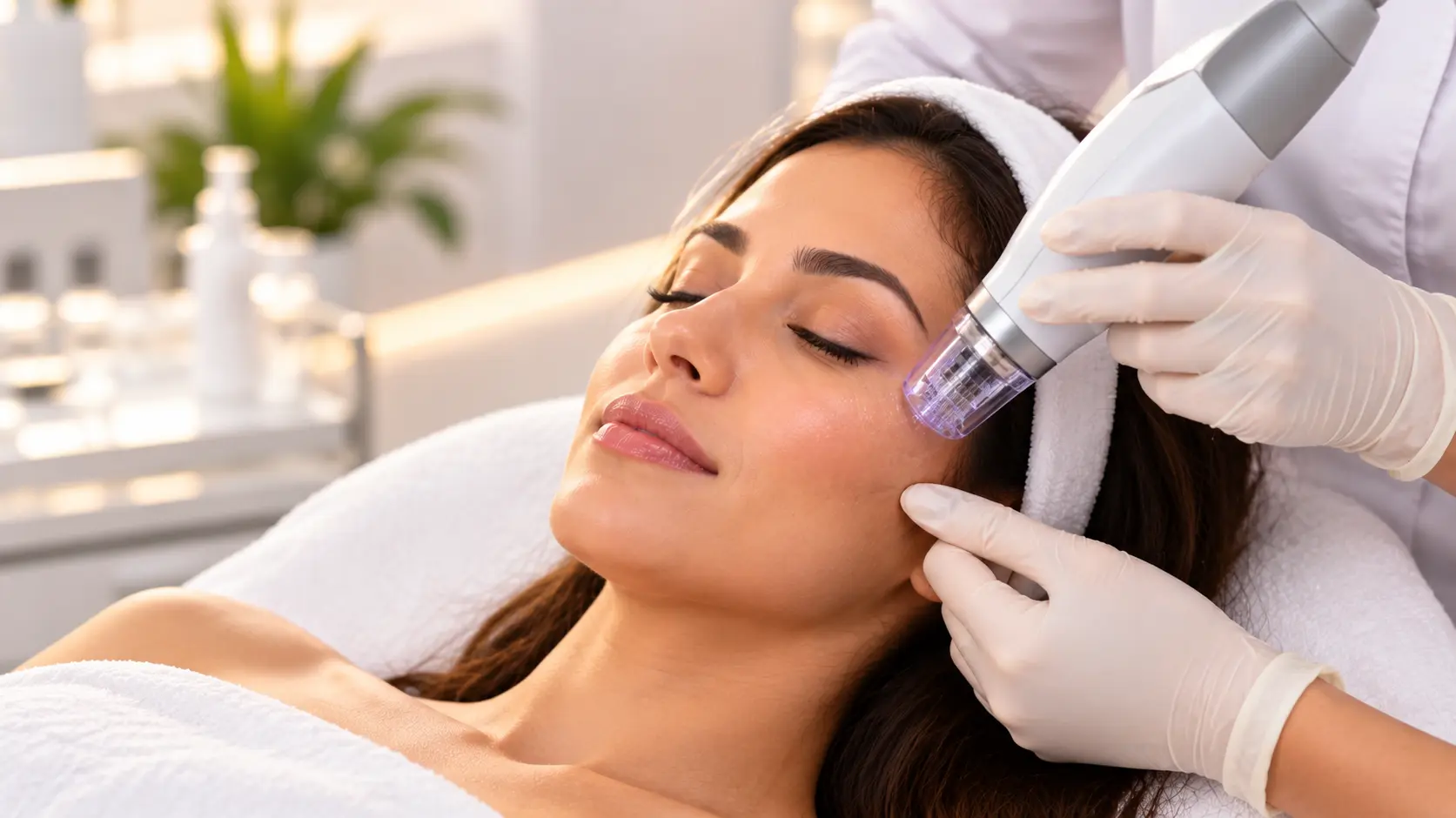
RF microneedling is a minimally invasive skin-resurfacing treatment that uses small needles to create controlled microchannels in the skin while simultaneously delivering radiofrequency energy beneath the surface.

The microneedles create tiny controlled injuries that activate the body’s natural healing response. At the same time, RF energy heats targeted tissue to support collagen and elastin remodeling.

As new collagen develops, the skin may gradually appear smoother, firmer, and more even. Because collagen remodeling takes time, improvements usually develop progressively rather than immediately.

Glo & Glam’s VirtueRF system combines microneedling with controlled RF energy and offers customizable treatment depths for different facial and body concerns. Its SmartRF handpiece is specifically designed for facial rejuvenation and can be used for concerns including acne scars, uneven texture, enlarged pores, and fine lines.

Does RF Microneedling Work on Acne Scars?

A common question is, does RF microneedling work on acne scars?

Research indicates that fractional RF microneedling can improve the appearance of acne scarring, particularly depressed scars associated with changes in collagen structure. A 2025 systematic review examining 16 studies involving 481 patients concluded that fractional radiofrequency microneedling is likely effective for acne scarring, while also noting that additional randomized trials are needed to determine the best treatment parameters.

The American Academy of Dermatology explains that radiofrequency treatments can stimulate collagen and elastin, and that combining RF with microneedling can make acne scars less noticeable.

However, results depend on the type and severity of your scars. Rolling, boxcar, and certain other depressed scars may respond differently, while some scars may require a combination of procedures rather than one treatment alone.

An evaluation is therefore important before choosing RF microneedling.

How Does RF Microneedling Improve Acne Scars?

Acne scars often develop because the skin does not produce the right amount or arrangement of collagen while healing from inflammation. Depressed scars can occur when too little collagen is produced after an acne lesion heals.

RF microneedling works by encouraging a controlled remodeling response.

The process generally involves:

  1. Microneedling: Tiny needles create controlled microchannels in the skin.
  2. Radiofrequency delivery: RF energy is delivered beneath the surface at selected depths.
  3. Healing response: The skin responds by initiating repair and remodeling processes.
  4. Collagen remodeling: New collagen and elastin develop gradually over time.
  5. Texture improvement: As the skin remodels, scars may appear softer and less defined.

The goal is not to erase every scar completely, but to reduce the visibility of scarring and improve overall skin texture.

RF Microneedling vs Regular Microneedling

When comparing RF microneedling vs regular microneedling, the main difference is the addition of radiofrequency energy.

Regular microneedling relies primarily on controlled micro-injuries to stimulate collagen production. RF microneedling adds controlled thermal energy beneath the skin while the needles are inserted.

The American Academy of Dermatology describes RF microneedling as microneedling that adds heat to the treatment. It notes that RF microneedling may enhance collagen production and can be used for acne scars.

That does not automatically mean RF microneedling is appropriate for every patient. Treatment depth, energy settings, skin type, scar characteristics, and desired outcome all influence which approach makes sense.

At Glo & Glam, the provider determines the appropriate handpiece, depth, and energy settings based on the individual’s skin and goals.

How Many RF Microneedling Sessions for Acne Scars?

Another major question is how many RF microneedling sessions for acne scars are needed.

There is no universal number because acne scars vary considerably. Treatment plans are often based on scar depth, skin condition, treatment intensity, and how the skin responds.

Glo & Glam states that many patients benefit from a series of three to four treatments, typically spaced about four to six weeks apart. Maintenance treatments may also be recommended depending on individual needs.

Multiple sessions are common because collagen remodeling is gradual. A series of treatments allows the skin to undergo repeated controlled stimulation rather than relying on one aggressive procedure.

Your provider may also recommend a different approach if your scars are particularly deep or if another procedure is better suited to the scar type.

RF Microneedling Results: When Will You See Improvement?

RF microneedling does not produce its full effect immediately.

You may notice temporary skin smoothness or an early glow after treatment, but more meaningful changes develop as collagen and elastin remodel.

Glo & Glam reports that results may become increasingly noticeable over approximately four to six weeks and can continue improving for several months.

A realistic timeline may look like this:

Immediately after treatment: Redness, warmth, mild swelling, sensitivity, or pinpoint marks may occur.

First few days: The skin gradually settles, although some dryness or light flaking may remain.

Several weeks: Early improvements in texture may become easier to see.

One to several months: Collagen remodeling can continue, allowing acne-scar texture and overall skin quality to progressively improve.

Individual results vary, and before-and-after photographs taken under consistent conditions can be useful for tracking progress.

RF Microneedling Downtime and Recovery

One of the advantages of RF microneedling is that it generally involves less downtime than some more aggressive resurfacing procedures.

The RF microneedling downtime and recovery period varies by treatment intensity and individual skin response. Temporary redness, swelling, warmth, sensitivity, pinpoint marks, dryness, and light flaking can occur. Glo & Glam states that redness often improves within several hours, although sensitivity or swelling can last longer after more intensive treatments.

After treatment, patients are generally advised to use gentle skincare, protect the skin from the sun, and avoid activities that create excessive heat or irritation for the recommended period.

Glo & Glam specifically recommends avoiding makeup for approximately 24 hours, using gentle cleanser and moisturizer, applying broad-spectrum sunscreen, limiting direct sun exposure, and avoiding strenuous exercise, saunas, excessive heat, retinoids, exfoliants, and acids until cleared by the provider.

Always follow the personalized aftercare instructions given for your skin.

Can RF Microneedling Be Combined With Other Treatments?

Some acne-scar patients benefit from combination treatment because different procedures address different aspects of scarring.

The American Academy of Dermatology notes that microneedling may be combined with treatments such as radiofrequency, chemical peels, or platelet-rich plasma. It also notes that PRP may be used alongside microneedling to enhance results in some patients.

Glo & Glam also offers PRP/PRF EZ Gel as a separate regenerative treatment. Whether PRP or another combination approach makes sense depends on the patient’s skin, scar characteristics, medical history, and treatment goals.

The objective is to create a treatment plan that addresses the actual cause and appearance of the skin concern rather than automatically adding procedures.

RF Microneedling in Arlington, TX

For people searching for RF microneedling Arlington TX, Glo & Glam provides VirtueRF treatments at its Viridian/Arlington location.

The Arlington office is located at 4080 North Collins Street, Suite 100, Arlington, TX 76005. Glo & Glam also has a Colleyville location.

You can explore Glo & Glam’s locations to learn more about the Arlington and Colleyville offices.

You can also visit the dedicated RF microneedling treatment page to review the treatment process and available VirtueRF options.

For additional offers, you can check the Glo & Glam specials. Promotions can change, and eligibility may vary by treatment.

Is RF Microneedling Right for Your Acne Scars?

RF microneedling may be a useful option for people who want to improve depressed acne scars, uneven texture, enlarged pores, or other signs of skin damage.

However, not every acne scar responds the same way. The American Academy of Dermatology recommends an individualized approach based on scar type, severity, skin characteristics, and whether active acne is still present.

A consultation can help determine whether RF microneedling is appropriate and whether another procedure or combination treatment could provide a better fit.

To learn more about Glo & Glam’s aesthetic and skincare services, visit the Glo & Glam website.

Frequently Asked Questions

1. Does RF microneedling work on acne scars?

RF microneedling can improve the appearance of many acne scars by stimulating collagen and elastin remodeling. Research supports its potential effectiveness, particularly for depressed acne scars, although results vary by scar type and patient.

2. How many RF microneedling sessions are needed for acne scars?

The number of treatments depends on scar severity, skin condition, treatment settings, and individual response. Glo & Glam states that many patients benefit from approximately three to four treatments spaced four to six weeks apart.

3. What is the difference between RF microneedling and regular microneedling?

Regular microneedling uses controlled micro-injuries to stimulate collagen, while RF microneedling combines those microchannels with radiofrequency energy delivered beneath the skin. The added energy provides another mechanism for controlled collagen remodeling.

4. What is RF microneedling downtime and recovery like?

Downtime is generally limited, but temporary redness, swelling, sensitivity, warmth, pinpoint marks, dryness, or light flaking can occur. Glo & Glam notes that redness often improves within several hours, while some sensitivity or swelling may last longer.

5. When will I see results from RF microneedling?

Some people notice an early glow or smoother appearance soon after treatment, but collagen remodeling takes time. Glo & Glam states that more noticeable improvements may develop over four to six weeks and continue improving for several months.

6. Is RF microneedling safe for different skin tones?

The American Academy of Dermatology states that radiofrequency microneedling is considered safe for all skin tones. However, treatment settings should still be customized to the individual’s skin and condition by an appropriately trained professional.

7. Can RF microneedling completely remove acne scars?

RF microneedling is intended to reduce the appearance of acne scars rather than guarantee complete removal. The amount of improvement depends on the scar type, depth, age, skin condition, and treatment plan. Some patients may benefit from combining RF microneedling with other treatments.

Peptide Therapy Explained: Benefits, Uses & What to Expect

Peptide therapy has become increasingly popular among people interested in recovery, wellness, sleep, body composition, and healthy aging. But with so much information online, it can be difficult to understand what peptide therapy actually is, which benefits are supported by evidence, and what you should expect from treatment.

So, what is peptide therapy? Peptides are short chains of amino acids that can act as signaling molecules in the body. Different peptides interact with different biological pathways, which means their potential uses, benefits, and risks can vary significantly. Some peptide-based medications are FDA-approved for specific medical conditions, while many peptides promoted in wellness settings remain investigational.

At Glo & Glam, peptide programs begin with a personalized medical consultation that considers your health history, medications, goals, potential risks, available evidence, and appropriate alternatives.

What Is Peptide Therapy?

Peptide therapy uses specific peptides with the goal of influencing biological signaling pathways involved in processes such as metabolism, tissue repair, recovery, and other physiological functions.

Unlike a single treatment designed to address everyone in the same way, peptide therapy can involve different compounds depending on the patient’s goals. This is important because peptides are not interchangeable, and the evidence for one peptide does not automatically apply to another.

Glo & Glam notes that commonly discussed compounds such as BPC-157 and CJC-1295 are investigational and not FDA-approved medications. The practice therefore emphasizes individualized evaluation rather than treating peptide therapy as a one-size-fits-all solution.

Peptide Therapy Benefits for Recovery

One of the most common reasons people explore peptide therapy is recovery. Active individuals may be interested in supporting their body’s recovery following exercise or periods of physical stress.

Certain investigational peptides are promoted for goals such as exercise recovery, mobility, soft-tissue wellness, and maintaining an active lifestyle. However, it is important to distinguish these wellness goals from proven medical indications. For example, Glo & Glam states that early research involving BPC-157 has explored tissue-repair pathways, but adequate human clinical trials have not established that it safely or effectively treats injuries, pain, inflammation, or other medical conditions.

This means peptide therapy for recovery and sleep should be approached as an individualized wellness discussion rather than a guaranteed performance or recovery solution.

Recovery also depends on fundamentals such as adequate nutrition, hydration, physical activity, stress management, and quality sleep. Peptide therapy should not be viewed as a replacement for these foundations.

Peptide Therapy and Sleep

Sleep is another area frequently discussed in connection with peptide therapy. People may seek treatment because they want to improve overall wellness, recovery, or nighttime rest.

However, the evidence behind individual peptides for sleep can vary substantially. A peptide that affects one biological pathway may not necessarily improve sleep quality, and investigational compounds can have uncertain long-term safety profiles.

For this reason, a proper consultation should include a discussion about your current sleep habits, medications, medical history, and possible causes of poor sleep before considering peptide treatment.

Rather than focusing only on the name of a peptide, the more useful question is whether there is a medically appropriate reason to consider a particular therapy and whether the potential benefits outweigh the risks.

Peptides for Anti-Aging and Healthy Aging

The phrase peptides for anti-aging encompasses a broad range of products and claims. Some peptides are being studied for their possible effects on cellular signaling, tissue repair, skin health, metabolism, or other age-related processes.

Research into therapeutic peptides and healthy aging is active, but the evidence differs considerably between compounds. A recent review found that FDA-approved peptide medicines have stronger clinical evidence, while several non-approved peptides have promising laboratory or limited clinical findings but lack long-term safety data and systematic validation.

Therefore, peptide therapy should not be presented as a way to reverse aging or guarantee specific cosmetic or longevity outcomes.

Peptide therapy is an emerging wellness approach that focuses on using specific peptides to support targeted functions within the body, depending on an individual’s health goals and treatment plan. Whether you’re exploring options related to recovery, sleep, metabolism, or healthy aging, understanding the specific peptide being considered and its potential benefits is an important part of the process. Learn more about peptide therapy at Glo & Glam and explore how a personalized treatment approach may fit your wellness goals.

What Can You Expect During Peptide Therapy?

The exact process depends on the peptide and treatment plan. A professional consultation generally comes first, allowing the provider to review your goals, health history, medications, and relevant risk factors.

The provider may discuss:

  • Your primary wellness or recovery goals
  • Relevant medical history and current medications
  • Potential benefits and limitations
  • Possible side effects and contraindications
  • Whether the proposed peptide is FDA-approved or investigational
  • Appropriate alternatives
  • How progress should be monitored

Glo & Glam describes its peptide program as personalized and states that treatment decisions are based on medical consultation, available evidence, potential risks, and appropriate alternatives.

This individualized approach is important because two people with similar wellness goals may not have the same medical considerations.

Is Peptide Therapy Safe?

The answer to is peptide therapy safe is not simply yes or no. Safety depends heavily on the specific peptide, dose, route of administration, source, patient, and whether the product has been adequately studied.

The FDA warns that compounded drugs are not FDA-approved and are not reviewed by the agency for safety, effectiveness, or quality before marketing. Poor compounding practices can also result in contamination, incorrect strength, or other quality problems.

The FDA has specifically identified safety concerns or limited safety information for a number of compounded peptides commonly discussed in wellness settings, including BPC-157, CJC-1295, ipamorelin, GHRP-2, GHRP-6, and others. The concerns include issues such as immunogenicity, peptide impurities, limited human data, and reported adverse events for certain compounds.

That is why peptide therapy should involve qualified medical oversight rather than purchasing or using unverified products independently.

Peptide Therapy in Arlington, TX

For individuals searching for peptide therapy Arlington TX, Glo & Glam offers personalized peptide programs and serves patients through its Arlington and Colleyville locations. The practice lists its Viridian/Arlington location at 4080 North Collins Street, Suite 100, Arlington, TX 76005.

You can review Glo & Glam’s locations to explore the available offices and determine which location is most convenient.

Before beginning peptide therapy, a consultation can help establish whether a particular treatment aligns with your goals and whether there are safer or better-supported alternatives.

Is Peptide Therapy Right for You?

The potential peptide therapy benefits depend on the particular peptide and the reason it is being considered. Peptide therapy may be discussed in the context of recovery, wellness, body composition, sleep, or healthy aging, but not every peptide has the same level of scientific evidence.

A thoughtful treatment plan should balance potential benefits with known risks, limitations in the research, and your individual health profile.

Glo & Glam offers medical wellness and aesthetic services designed around individualized treatment goals. You can learn more about its services through the Glo & Glam website.

Before scheduling treatment, patients can also review current Glo & Glam specials to see available qualifying offers. Promotions, eligibility, and availability can change over time.

Frequently Asked Questions

1. What is peptide therapy?

Peptide therapy uses specific peptides to influence biological signaling pathways in the body. Different peptides have different proposed mechanisms, uses, and safety considerations. Some peptide medications are FDA-approved for specific conditions, while others discussed in wellness settings remain investigational.

2. What are the potential peptide therapy benefits?

Potential benefits depend on the specific peptide and treatment goal. Peptide therapy is commonly discussed in relation to recovery, wellness, metabolism, sleep, and healthy aging. However, many commonly marketed peptides do not have enough high-quality human evidence to guarantee specific outcomes.

3. Can peptide therapy help with recovery and sleep?

Some people explore peptide therapy for recovery and sleep-related wellness goals. However, evidence varies between individual peptides, and investigational peptides should not be assumed to treat sleep disorders or injuries. A medical consultation can help identify appropriate treatment options.

4. Are peptides effective for anti-aging?

Some peptides are being studied for potential roles in healthy aging, tissue repair, metabolic health, and skin-related processes. However, evidence varies widely, and many non-approved peptides lack long-term human safety and effectiveness data.

5. Is peptide therapy safe?

Safety depends on the particular peptide, formulation, dose, administration method, and patient. The FDA has identified safety and quality concerns involving some compounded peptides, while compounded drugs themselves are not FDA-approved. Medical supervision and appropriate product sourcing are therefore important.

6. Where can I find peptide therapy in Arlington, TX?

Glo & Glam provides personalized peptide therapy services and serves Arlington and Colleyville. Its Viridian/Arlington location is at 4080 North Collins Street, Suite 100, Arlington, TX 76005. Patients can schedule a consultation to discuss their goals and whether peptide therapy is appropriate.

Botox vs Dermal Fillers: A Guide for Colleyville Patients Choosing a Treatment

When you start noticing fine lines, wrinkles, lost facial volume, or changes in your lips and cheeks, you may wonder which cosmetic treatment is right for you. Botox vs dermal fillers is not necessarily a choice between two competing treatments. Botox and fillers address different aspects of facial aging, and the better option depends on what you want to improve.

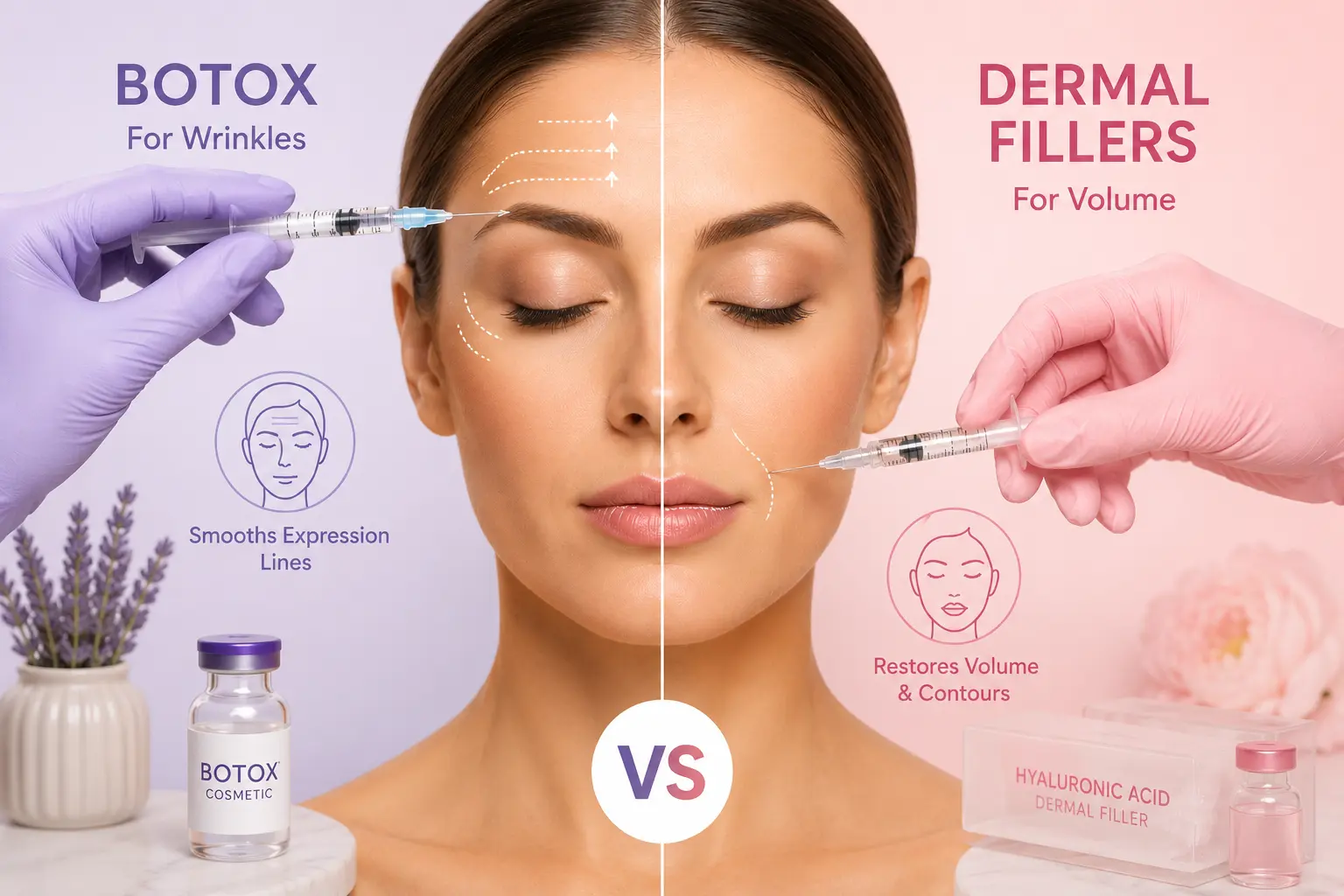
Botox is primarily used to temporarily relax specific facial muscles that contribute to expression lines. Dermal fillers, on the other hand, add volume beneath the skin to restore or enhance facial contours. Understanding this distinction can make it easier to choose a treatment that fits your goals.

For patients considering Botox and fillers in Colleyville, TX, an individualized consultation is an important step. Your provider can evaluate your facial anatomy, the type of lines or volume loss you have, and the type of result you want to achieve.

What Is the Difference Between Botox and Fillers?

The simplest way to understand the difference between Botox and fillers is to look at what each treatment does beneath the skin.

Botox is a neuromodulator. It works by temporarily reducing the nerve signals that tell targeted muscles to contract. When those muscles relax, certain expression-related wrinkles become less noticeable. The American Academy of Dermatology reports that botulinum toxin treatment can make fine lines and wrinkles appear less visible and generally lasts about three to four months, although results can sometimes last longer.

Dermal fillers work differently. Instead of relaxing muscles, fillers are injected beneath the skin to restore or add volume. Depending on the product and treatment area, fillers may be used to enhance the lips, improve facial contours, soften certain creases, or restore volume lost with age.

This is why comparing Botox and fillers strictly as alternatives can be misleading. One primarily changes muscle activity, while the other changes volume and contour.

Botox for Wrinkles vs Filler for Volume

The question of Botox for wrinkles vs filler for volume is one of the most useful ways to determine which treatment may fit your concerns.

Botox is typically best suited to dynamic wrinkles. These are lines that become more visible when you make facial expressions. Common treatment areas include the forehead, the vertical lines between the eyebrows, and crow’s feet around the eyes.

For example, repeatedly raising your eyebrows or squinting can cause expression lines to become increasingly noticeable. Botox can temporarily reduce the muscle activity responsible for those lines, resulting in a smoother appearance.

Dermal fillers are generally better suited to concerns involving volume loss or changes in facial contour. Depending on the product and treatment plan, fillers may be used in areas such as the cheeks, lips, chin, and certain facial creases.

A person with prominent forehead lines may benefit more from Botox, while someone experiencing hollow cheeks or decreased lip volume may be a better candidate for filler. In some cases, both concerns exist at the same time.

When Might Botox Be the Better Choice?

Botox may be appropriate when your primary concern is movement-related wrinkling rather than a lack of volume.

You may want to discuss Botox with a qualified provider if you are concerned about:

  • Forehead expression lines
  • Frown lines between the eyebrows
  • Crow’s feet
  • Wrinkles that become more prominent with facial expressions
  • A desire for a smoother, refreshed appearance without adding facial volume

The goal is not necessarily to eliminate every facial movement. Appropriate treatment should be tailored to your anatomy and desired appearance. Dermatologists generally aim to relax targeted muscles while preserving natural facial expression.

Botox treatments are also relatively quick, with the injection portion often taking only a short amount of time. Results develop gradually rather than appearing instantly.

When Might Dermal Fillers Be the Better Choice?

Fillers may be more appropriate when volume loss or facial contour is the primary concern.

Aging naturally changes facial structure. Loss of subcutaneous volume can contribute to flatter cheeks, changes around the mouth, and other contour changes. Dermal fillers can be used to replace or enhance volume in selected areas.

Depending on your treatment plan, filler may be considered for:

  • Lip enhancement or restoration
  • Reduced cheek volume
  • Certain facial creases
  • Chin or facial contouring
  • Areas where volume loss contributes to an aged or tired appearance

Most fillers produce visible results relatively quickly, although swelling can temporarily affect the final appearance. The exact result and recovery period depend on the product, injection site, and individual patient.

Natural-looking results depend heavily on choosing an appropriate product and using a conservative, anatomy-based treatment approach. The American Academy of Dermatology specifically advises patients to prioritize qualified medical professionals with experience performing filler injections.

Which Lasts Longer: Botox or Filler?

One of the most common questions patients ask is, which lasts longer Botox or filler?

There is no single answer because longevity depends on the specific treatment, product, injection area, and individual factors.

Botulinum toxin results commonly last around three to four months.

Dermal filler longevity varies much more widely. The American Academy of Dermatology notes that hyaluronic acid fillers commonly last approximately four to 12 months, while some other types of fillers can last considerably longer. The American Society of Plastic Surgeons also notes that some filler treatments can last from several months to several years depending on the filler and the individual receiving it.

Therefore, it is generally inaccurate to say that every filler lasts a specific number of months or that one injectable is always longer-lasting than another.

During a consultation, ask about the exact product being recommended, the treatment area, expected longevity, and the maintenance schedule you may need.

Can You Combine Botox and Fillers?

Yes, can you combine Botox and fillers is a common question because the treatments address different concerns.

A combination approach may make sense when a patient has both dynamic wrinkles and volume loss. For example, Botox may be used to address forehead or frown lines while filler is considered for an area where volume has diminished.

The advantage of combining treatments is that each can address a different component of facial aging. Rather than attempting to use filler for a problem caused primarily by muscle movement—or Botox for a concern related primarily to volume loss—the treatment plan can be designed around the underlying cause.

However, combining injectables should not automatically mean using more product. The goal should be an appropriately balanced result based on your facial anatomy and cosmetic objectives.

The FDA notes that dermal filler injections have potential complications, including infection, nodules, tissue injury, and, rarely, vascular complications that can result in serious outcomes such as vision abnormalities or stroke. Because of these risks, injectable treatments should be performed by appropriately trained medical professionals using approved products for appropriate indications.

What Should Colleyville Patients Consider Before Treatment?

Choosing between Botox and filler should involve more than identifying a treatment that looks appealing on social media. Your provider should evaluate the location and type of wrinkles, facial proportions, skin condition, volume distribution, and your desired degree of correction.

It is also important to discuss your medical history, medications, allergies, previous cosmetic treatments, and any active skin conditions before receiving injectable treatment.

For dermal fillers in particular, the injection is a medical procedure and should not be performed in a non-medical setting such as a party, salon, or private home. The AAD recommends seeing a physician with appropriate expertise in filler injections.

Patients interested in aesthetic treatments can explore the available medspa services to understand the broader range of options available.

How to Get Started With Botox and Fillers in Colleyville, TX

There is no universal Botox-versus-filler answer because every face ages differently. The right approach depends on whether your primary concern is muscle-related wrinkles, volume loss, facial contour, or a combination of concerns.

For patients researching Botox and fillers in Colleyville, TX, a consultation provides an opportunity to discuss your goals and determine whether Botox, dermal fillers, another treatment, or a combination approach is appropriate.

You can explore Glo & Glam to learn more about available aesthetic services. You can also view locations and review current specials before scheduling.

If you are interested in addressing additional skin concerns beyond injectables, explore the available laser treatments and discuss which options may complement your overall aesthetic goals.

For patients concerned about the cost of treatment, financing options may also be available, depending on eligibility and the services selected.

FAQs

Is Botox better than dermal filler?

Neither treatment is universally better. Botox and dermal fillers work in different ways and are designed for different concerns. Botox primarily reduces targeted muscle activity to soften dynamic wrinkles, while fillers restore or add volume. The appropriate option depends on your facial anatomy and treatment goals.

What is the difference between Botox and fillers?

Botox temporarily relaxes targeted facial muscles to reduce the appearance of expression-related lines. Dermal fillers are injected beneath the skin to restore or enhance volume and contour. Because they address different causes of facial aging, some patients may benefit from either one, while others may benefit from both.

Which lasts longer, Botox or filler?

Botox commonly lasts about three to four months. Filler longevity varies by product and treatment area, with some fillers lasting several months to multiple years. Hyaluronic acid fillers commonly last around four to 12 months, according to the American Academy of Dermatology.

Can you combine Botox and dermal fillers?

Yes. Botox and fillers may be used together when a patient has both dynamic wrinkles and volume loss. Combining them can allow each treatment to address a different concern. Your provider should determine whether combination treatment is appropriate based on your anatomy, goals, and overall treatment plan.

Are dermal fillers safe?

Dermal fillers are medical treatments and have potential risks, including swelling, bruising, infection, lumps, and other complications. Rare but serious complications can occur if filler unintentionally enters a blood vessel. Choosing an appropriately trained medical provider is an important part of reducing risk.

Will Botox or fillers make me look unnatural?

Cosmetic injectables do not inherently produce an unnatural appearance. Results depend on factors such as treatment planning, product selection, injection technique, amount used, and the patient’s anatomy. A conservative approach can help maintain facial balance and natural expression.

How do I know whether I need Botox or filler?

Start with the specific concern you want to change. If the issue is primarily expression-related wrinkles, Botox may be appropriate. If the concern involves lost volume or facial contour, filler may be considered. A professional evaluation can determine which approach is most suitable and whether a combination treatment would provide a more balanced result.

Scary Skin-Care Ingredients You Should Never Put on Your Skin

6 Skincare Ingredients You Should Avoid at All Costs

We’ve all seen a new, exciting skincare product blow up in stores and all over social media — and we know how exciting it can be to hop on the new trend train. However, a lot of these products are not exactly known as ‘clean’ beauty products, and all the hype surrounding their release can cloud you from how damaging the ingredients of the product are for your skin.

No matter how pretty the packaging is, if the skincare product you’re using or are interested in includes these ingredients, leave it on the shelf.

1. Parabens

Did you know that about 70-90% of cosmetic products contain parabens? These are preservative chemicals that mimic estrogen and help give off a radiant, youthful appearance — but at the cost of your skin’s health. Parabens can be found in many major brands of makeup, moisturizers, and shaving creams, and have been linked to breast and skin cancer and are easily absorbed, causing them to spread throughout your body.

Before choosing a product, make sure the label reads ‘paraben free’, and check the ingredients list to be sure.

2. Phthalates

Wonder how your foundation sticks to your skin so well? You can thank phthalates — not a Greek god, a group of chemicals used to increase the flexibility of plastics in cosmetics.

Phthalates have been known to be extremely troubling for children (resulting in its ban from children’s products) and have been documented as endocrine-disrupting and birth defect-causing substances.

3. Fragrances

Your favorite cleanser may smell like eucalyptus, but does it actually contain eucalyptus? If a skincare company lists “fragrance” as one of their ingredients, they aren’t required to disclose the actual chemicals that make up this fragrance.

This means that the calming or enticing scent in your product could be any number of irritating chemicals that can harm your skin — or even cause asthma, allergies, and hormone disruption.

4. Formaldehyde-Releasing Preservatives

Here’s a pro tip: formaldehyde has no place in your skincare. Yet, many cosmetic companies get away with adding this colorless, strong-scented, and flammable gas to their products. How? By disguising it as one of these ingredients:

  • DMDM hydantoin
  • Diazolidinyl urea
  • Imidazolidinyl urea
  • Methenamine
  • Quaternium-15
  • Sodium hydroxymethylglycinate
  • Bronopol (2-bromo-2-nitropropane-1, 3-diol)
  • 5-Bromo-5-nitro-1,3-dioxane

That’s a lot of words — so you may want to screenshot this list and bring it to the store with you!

5. Petrolatum & Lead

We wish we were kidding with this list of ingredients, but we’re not. Petrolatum contains polycyclic aromatic hydrocarbons (PAHs), and exposure has been linked with cancer, skin irritation, and allergies.

Lead is used in a wide variety of makeup products, and it’s a neurotoxin. This means that lead can cause behavioral and learning problems, like a lowered IQ.

6. BHT

Butylated hydroxytoluene (BHT) is a cocktail of synthetic antioxidants that are used to extend the shelf life of many cosmetic products. They are also likely carcinogens and hormone disruptors that may cause liver damage.

Gain Back Your Glo With Our Team

If this list of products made you question what ingredients are in your skincare products — we don’t blame you. Luckily, our team at Glo & Glam is here to help you find the perfect routine for your skin that won’t cause damage.

Check out our services online, and contact us today to book your first consultation!

Categories: