
Get 20% Off On First Visit
Discover Our Latest Specials
Serving Arlington & Colleyville
GIVE $50. GET $50. GLOW TOGETHER.
Top

Chemical Peel Recovery Time: What to Expect After Treatment

How Long Does It Take to Recover From a Chemical Peel?

Thinking about getting a chemical peel but worried about how your skin will look afterward? You’re not alone. Many people love the idea of smoother, brighter skin but aren’t sure what to expect during the days following treatment.

Will your face turn red? How long will the peeling last? Can you go to work the next morning?

The good news is that recovery doesn’t look the same for everyone. A gentle peel may leave your skin slightly pink for a day or two, while a stronger treatment can involve more noticeable peeling and a longer healing period.

Understanding chemical peel recovery time before your appointment can help you plan your schedule, care for your skin, and avoid unnecessary irritation.

At Glo & Glam MedSpa, serving Arlington and Colleyville, TX, chemical peel treatments are selected according to individual skin concerns and goals.

Here’s what you should know about healing, aftercare, and getting back to your regular routine.

How Long Is Chemical Peel Downtime?

The recovery period depends mainly on how deeply the treatment exfoliates your skin.

Chemical peels use carefully selected solutions to remove damaged outer skin layers and encourage skin renewal. Some affect only the surface, while stronger peels reach deeper layers.

Here’s a general recovery timeline:

Chemical Peel Type Typical Healing Time What to Expect
Light or superficial peel 1–7 days Mild redness, dryness, or light flaking
Medium-depth peel 7–14 days Redness, swelling, and more visible peeling
Deep peel 14–21 days or longer Significant healing, protective dressings, and medical follow-up

These are general timelines, not guarantees. Redness and skin sensitivity can continue after the initial healing period, especially with deeper treatments.

Glo & Glam offers several chemical peel treatments, including VI Peel options for concerns such as uneven tone, acne-prone skin, and visible signs of aging.

Your provider can explain the expected downtime for the specific formula recommended during your consultation.

Chemical Peel Healing Process: What Happens Day by Day?

Knowing what to expect after a chemical peel can make recovery feel less intimidating.

The following timeline describes a common experience after a superficial or selected medium-depth peel. Your actual healing process may differ.

Day 1: Redness and Tightness

Immediately after treatment, your skin may feel warm, tight, or mildly sensitive.

Some people notice pinkness similar to a light sunburn. Others experience very little visible irritation.

Your skin’s protective barrier is temporarily more vulnerable, so this isn’t the time to experiment with new skincare products.

Use only the cleanser, moisturizer, and other products recommended by your provider.

Days 2–3: Dryness and Early Flaking

During the next couple of days, you may notice that your skin feels drier or tighter than usual.

Small flakes can begin appearing around the mouth, nose, or chin.

This is a normal part of the exfoliation process for many peels, although some superficial treatments produce little or no visible peeling.

Resist the temptation to scrub away dry patches. The skin underneath is still healing.

Days 4–7: More Noticeable Peeling

For some treatments, this is when flaking becomes more visible.

You might notice peeling around your cheeks, jawline, or forehead. Your skin may also look temporarily uneven as older surface cells shed.

Continue moisturizing as directed, and avoid pulling at loose skin.

If you’ve received a stronger peel, healing may still be in its early stages at this point.

Days 7–14: Skin Begins Settling

After a superficial peel, visible flaking has often resolved by this stage, and skin may appear smoother.

Medium-depth treatments can take the full one to two weeks to heal.

Even when peeling stops, your skin may remain sensitive. Avoid assuming it’s ready for exfoliating products simply because it looks better.

For deep peels, recovery extends beyond this period and requires close medical supervision.

How Long Does Chemical Peel Flaking Last?

One of the most common questions is whether peeling will continue for days or weeks.

With a light chemical peel, scaling may last around three to seven days. Medium-depth peels can involve peeling or crusting for seven to fourteen days.

However, not everyone experiences dramatic shedding.

Some people notice only fine flakes, while others see larger areas of peeling depending on the treatment.

More peeling doesn’t necessarily mean better results.

The purpose of a chemical peel is controlled skin resurfacing, not producing the greatest possible amount of visible flaking.

If you experience unusually severe pain, spreading redness, discharge, or unexpected blistering, contact your treating provider promptly.

Chemical Peel Aftercare: How to Help Your Skin Heal

Good chemical peel aftercare is essential for comfortable recovery and reducing the risk of complications.

Cleanse Gently

Use a mild cleanser recommended by your provider.

Avoid cleansing brushes, rough washcloths, facial scrubs, or aggressive rubbing.

Some peel formulas have specific instructions about when you can first wash your face, so always follow your treatment-specific guidance.

Moisturize Regularly

Your skin may feel unusually dry as it heals.

Applying an approved moisturizer helps support the skin barrier and reduce uncomfortable tightness.

For deeper peels, your provider may prescribe an ointment or a more specialized wound-care routine.

Protect Your Skin From Sun Exposure

Freshly treated skin is particularly vulnerable to UV damage and unwanted pigmentation changes.

Avoid direct sun exposure during healing. Once your provider confirms it’s appropriate, use broad-spectrum SPF 30 or higher, along with protective clothing and shade.

Medium and deep peels may require stricter sun avoidance.

Pause Strong Skincare Ingredients

Retinoids, exfoliating acids, benzoyl peroxide, and other potentially irritating products may need to be temporarily discontinued.

Don’t restart them until your provider confirms that your skin has healed sufficiently.

Never Pick or Pull Peeling Skin

It can be tempting to remove a hanging piece of skin, especially before going out.

However, peeling skin away prematurely may cause irritation, infection, discoloration, or scarring.

Let the flakes shed naturally.

What Should You Avoid After a Chemical Peel?

During the early healing period, common post-chemical peel care precautions include avoiding intense exercise that causes excessive sweating, hot saunas, tanning beds, waxing, and additional exfoliating treatments.

You may also need to postpone makeup, depending on the strength of the peel and the condition of your skin.

For superficial peels, makeup may be permitted immediately or the next day. Medium and deep peels require longer restrictions.

Before scheduling another facial, microneedling session, or other medspa treatment, ask how much recovery time is recommended between procedures.

Following the right sequence can help avoid unnecessary skin irritation.

When Can You Return to Work or Social Activities?

Your recovery plan should account for more than just physical healing.

With a light peel, many people return to everyday activities quickly, although mild redness or flaking may still be noticeable.

A medium-depth peel can require approximately one to two weeks of healing, so you may prefer to schedule time away from work or social events.

Deep peels involve more substantial downtime and medical follow-up.

If you have a wedding, vacation, professional event, or family photos coming up, discuss the timing with your provider before booking.

It’s generally better to give your skin extra recovery time than schedule a resurfacing treatment immediately before an important occasion.

Is a Chemical Peel Better Than Laser Skin Resurfacing?

Chemical peels aren’t the only option for improving skin texture or discoloration.

Depending on your concerns, you may also consider laser and light-based skin treatments.

Chemical peels use exfoliating solutions, while laser treatments use controlled light energy to target specific skin concerns.

Both can involve downtime, but recovery varies significantly according to the treatment’s intensity.

Someone with mild dullness may benefit from a relatively gentle peel, while a person with more pronounced texture concerns might need a different approach.

Your provider should consider your skin tone, sensitivity, pigmentation history, and expectations before recommending either treatment.

Planning Chemical Peel Recovery in Arlington, TX

If you’re researching chemical peel recovery in Arlington, TX, your schedule and local lifestyle are worth considering.

North Texas sunshine can make proper post-treatment sun protection particularly important, especially for people who spend time outdoors.

At Glo & Glam’s Arlington and Colleyville locations, you can discuss your skincare goals and expected downtime before choosing a treatment.

If you’re planning a series of appointments, the available medspa memberships may be worth reviewing. Glo & Glam currently includes chemical peel services within certain membership options.

You can also explore financing options when considering your overall treatment budget. Eligibility and payment terms depend on the financing provider.

For more skincare and aesthetic treatment information, visit the Glo & Glam blog.

Frequently Asked Questions

1. How long does it take to recover from a chemical peel?

Light chemical peels generally heal within one to seven days. Medium peels often require seven to fourteen days, while deep peels may take two to three weeks or longer. Your exact recovery depends on the solution, treatment depth, and skin response.

2. Can I wash my face after a chemical peel?

Usually, yes, but the timing depends on the formula used. Some treatments require waiting several hours before washing. Follow your provider’s instructions and use only approved gentle cleansing products.

3. What day does your skin start peeling?

Visible flaking often begins around two to three days after treatment, but timing varies. Some superficial peels cause little or no visible peeling.

4. Can I wear makeup during chemical peel recovery?

After a light peel, makeup may be permitted immediately or the following day. Stronger peels require a longer healing period before makeup is appropriate. Always confirm with your provider.

5. What happens if I pick peeling skin?

Pulling at peeling skin can interrupt healing and increase the risk of irritation, infection, scarring, and pigmentation changes. Allow the skin to shed naturally.

6. How do I know if my chemical peel is healing properly?

Mild redness, tightness, dryness, and flaking can be expected. Worsening pain, increasing swelling, pus, unusual discoloration, or persistent burning may indicate a complication and should be assessed promptly.

7. When can I get another chemical peel?

The timing depends on the type of peel and how completely your skin has healed. Superficial peels may be repeated every few weeks when recommended, while stronger treatments require longer intervals.

Give Your Skin Time to Heal and Glow

Chemical peel results don’t happen overnight, and that’s perfectly normal.

Whether your skin needs a few days of gentle care or a longer recovery period, understanding the healing process can help you feel prepared.

The most important steps are simple: follow your provider’s aftercare instructions, protect your skin from the sun, avoid picking at flakes, and allow adequate time for healing.

At Glo & Glam MedSpa in Arlington and Colleyville, TX, you can explore chemical peel options tailored to your concerns and discuss what recovery may look like before treatment.

Schedule a consultation with Glo & Glam to find a treatment that fits your skin goals and your schedule.
Botox vs. Dysport: Which Wrinkle Relaxer Fits Your Goals?

How Are Botox and Dysport Different?

Fine lines have a way of sneaking up on us. One day, your forehead looks smooth, and the next, you notice lines that seem to stick around even when your face is relaxed. If you’ve been considering wrinkle-relaxing injections, you’ve probably come across two popular names: Botox and Dysport.

Both treatments can soften expression lines and help you look refreshed without surgery. But when comparing Botox vs Dysport, it’s natural to wonder whether one works faster, lasts longer, or delivers better results.

The answer isn’t as simple as picking the more popular brand. Your facial muscles, skin concerns, treatment goals, and injector’s technique all play a role.

At Glo & Glam MedSpa, serving Arlington and Colleyville, TX, understanding these differences is the first step toward choosing a treatment that feels right for you.

What Are Botox and Dysport?

Botox and Dysport are injectable neuromodulators, also called neurotoxins. Both use purified forms of botulinum toxin type A to temporarily reduce muscle activity responsible for certain facial wrinkles.

Every time you smile, squint, frown, or raise your eyebrows, your facial muscles move the skin above them. Over time, these repeated movements can create lines that become more noticeable.

Wrinkle relaxers work by temporarily blocking nerve signals to targeted muscles. As the muscles relax, the overlying skin appears smoother.

Botox Cosmetic (onabotulinumtoxinA) is FDA-approved for temporarily improving moderate to severe frown lines, crow’s feet, forehead lines, and certain neck bands in adults.

Dysport (abobotulinumtoxinA) is FDA-approved for temporarily improving moderate to severe frown lines between the eyebrows in adults younger than 65.

Although both products work through a similar mechanism, their formulations, dosing units, and approved cosmetic uses differ.

Botox vs Dysport: What Are the Main Differences?

Understanding this neurotoxin treatment comparison can make choosing between the two easier.

How Quickly Do Results Appear?

One reason people consider Dysport is its relatively quick onset.

Some Dysport patients notice improvement within 24 hours, and more than half of participants in certain clinical studies noticed changes within two to three days.

Botox results generally begin appearing within several days, with the full effect developing over approximately two weeks.

However, individual responses vary. Neither treatment should be expected to produce an immediate final result.

If you’re preparing for a wedding, family gathering, or another important event, schedule your consultation well in advance rather than relying on a specific onset time.

Which Lasts Longer, Botox or Dysport?

Both treatments usually provide temporary results lasting around three to four months, although some people experience shorter or longer effects.

Duration depends on several factors, including:

  • Strength and activity of facial muscles
  • Treatment area and appropriate dosage
  • Individual response to the product
  • Previous treatment history
  • Injector technique

There isn’t reliable evidence that one consistently lasts longer for every patient.

When deciding between Botox or Dysport, consider how your skin responds rather than assuming the more expensive or faster-acting option will last longer.

Botox vs Dysport Results: Which Looks More Natural?

A common concern about wrinkle relaxers is looking frozen or losing natural facial expressions.

The good news is that both products can create subtle, natural-looking improvements when administered appropriately.

Successful treatment isn’t about eliminating every bit of movement. It’s about relaxing the muscles responsible for unwanted lines while maintaining facial balance.

For example, someone with strong frown lines may want a noticeable softening between the eyebrows. Another person may prefer a lighter treatment that preserves more movement.

Your injector should evaluate your facial anatomy and discuss your preferred outcome before selecting a product or dose.

If you’re also concerned about volume loss around your cheeks or mouth, remember that wrinkle relaxers and fillers serve different purposes. Our Botox vs. dermal fillers treatment guide explains when each option may be appropriate.

Dysport vs Botox for Forehead Wrinkles

Forehead lines are among the most common reasons people explore injectable wrinkle treatments.

These horizontal lines develop as the forehead muscles repeatedly lift the eyebrows.

Botox Cosmetic has an FDA-approved indication for moderate to severe forehead lines in adults when treated together with the glabellar muscles between the eyebrows.

Dysport’s FDA-approved cosmetic indication covers glabellar frown lines. Using Dysport for horizontal forehead lines is considered an off-label application.

That doesn’t automatically mean it’s inappropriate, but it does mean your qualified medical provider should explain the evidence, risks, and treatment options.

Forehead injections require particular care. Relaxing the wrong muscles or using an unsuitable dose can create unwanted eyebrow heaviness or drooping.

Rather than choosing a product based only on its name, discuss your forehead movement, brow position, and desired appearance during your consultation.

Dysport vs Botox Cost: Which Is More Affordable?

Price is another important consideration, especially if you’re planning ongoing maintenance.

Botox and Dysport may be priced per unit or by treatment area. However, their units are not interchangeable.

Dysport often requires a higher number of labeled units than Botox for a comparable treatment. That doesn’t necessarily make it more expensive, because the price per unit may also differ.

Your total treatment cost depends on the product selected, recommended dosage, treatment area, and provider’s pricing structure.

For a meaningful comparison, request the estimated total treatment price, not just the advertised unit price.

At Glo & Glam, you can also explore available financing options and membership programs when planning your aesthetic care. Ask the team which benefits or payment arrangements apply to your chosen treatment.

What Should You Expect During Treatment?

A wrinkle-relaxer appointment typically begins with a consultation to discuss your concerns, medical history, and desired results.

Your injector may ask you to frown, smile, or raise your eyebrows to assess how your muscles move.

Once a treatment plan is established, a series of small injections is placed into the selected muscles using a fine needle.

The injection portion usually takes only a few minutes, although the complete appointment may take longer.

Temporary redness, tenderness, swelling, or bruising can occur. Most patients can return to many normal activities afterward, following their provider’s specific instructions.

Before treatment, tell your injector about medications, previous botulinum toxin treatments, allergies, pregnancy or breastfeeding, and any neuromuscular conditions.

Possible complications include headache, asymmetry, and eyelid or eyebrow drooping. Rarely, botulinum toxin effects can spread beyond the injection area and cause serious swallowing, speaking, or breathing difficulties requiring immediate medical attention.

Can Wrinkle Relaxers Be Combined With Other Skin Treatments?

Not every visible line develops from muscle movement alone.

Sun exposure, changes in collagen, skin texture, and natural aging can contribute to wrinkles that remain visible even when your face is still.

In these situations, Botox or Dysport may address only part of the concern.

Other medspa services, including skin rejuvenation procedures, may be considered as part of a personalized treatment plan.

For example, laser and light-based skin treatments can address concerns such as uneven texture, sun damage, and certain fine lines.

Your provider can explain whether combining treatments is appropriate and how to space appointments safely.

Is Botox or Dysport Better for Your Goals?

The best choice depends on what you’re hoping to improve.

If your main concern is forehead lines or crow’s feet, Botox has specific FDA-approved cosmetic indications for these areas.

If you’re focused on frown lines between your eyebrows, both Botox and Dysport are established options worth discussing.

You might also have a previous treatment experience that influences your preference.

At Glo & Glam’s Arlington and Colleyville locations, the goal is to build a treatment plan around your individual facial anatomy and aesthetic preferences rather than applying the same approach to everyone.

You can also explore additional skincare topics in the Glo & Glam blog before your appointment.

Frequently Asked Questions

1. Is Dysport better than Botox?

Not necessarily. Both can effectively soften frown lines. Dysport may begin working sooner for some patients, while Botox has FDA-approved cosmetic uses covering additional facial areas. Your provider can help determine which is more suitable.

2. Which lasts longer, Botox or Dysport?

Results commonly last approximately three to four months for both treatments. Individual factors, including muscle activity and dosage, influence how long improvements remain visible.

3. Does Dysport work faster than Botox?

Dysport can show early improvement within one to three days in some patients. Botox typically begins producing visible changes within several days. Full results should be evaluated after the recommended follow-up period.

4. Is Dysport cheaper than Botox?

Not always. Dysport may have a lower advertised price per unit, but the two products use different dosing systems. Compare the total cost of your recommended treatment rather than individual unit prices.

5. Will Botox or Dysport make my face look frozen?

Neither treatment automatically creates a frozen appearance. Appropriate product selection, dosage, and injection placement help preserve natural expressions. Discuss the amount of movement you’d like to maintain with your injector.

6. Can I switch from Botox to Dysport?

Switching may be possible, but your provider needs to review your previous treatment, including the product, dose, injection locations, and date. Do not overlap treatments without medical guidance.

Find Your Ideal Wrinkle Relaxer at Glo & Glam

Choosing between Botox and Dysport doesn’t have to be confusing. Both offer nonsurgical ways to soften expression lines, but the best results come from understanding your facial anatomy and setting realistic expectations.

Whether you’re exploring wrinkle relaxers for the first time or reconsidering your current treatment, Glo & Glam MedSpa in Arlington and Colleyville, TX, can help you discuss your options and develop a personalized plan.

Schedule a consultation with Glo & Glam to discover which wrinkle-relaxing treatment best aligns with your goals.

RF Microneedling for Acne Scars: What Arlington Patients Can Expect

Acne scars can remain long after active breakouts have disappeared, affecting skin texture, smoothness, and confidence. While topical skincare can help improve certain concerns, deeper or depressed acne scars often require professional treatments that stimulate collagen remodeling.

RF microneedling for acne scars combines the controlled micro-injuries of traditional microneedling with radiofrequency energy delivered into targeted layers of the skin. This combination is designed to stimulate collagen and elastin production while gradually improving the appearance and texture of acne scars. The American Academy of Dermatology recognizes radiofrequency microneedling as one of the treatment options that may make acne scars less noticeable.

Glo & Glam offers VirtueRF microneedling in Arlington and Colleyville, with customizable treatment settings based on the patient’s skin, treatment area, and goals.

What Is RF Microneedling?

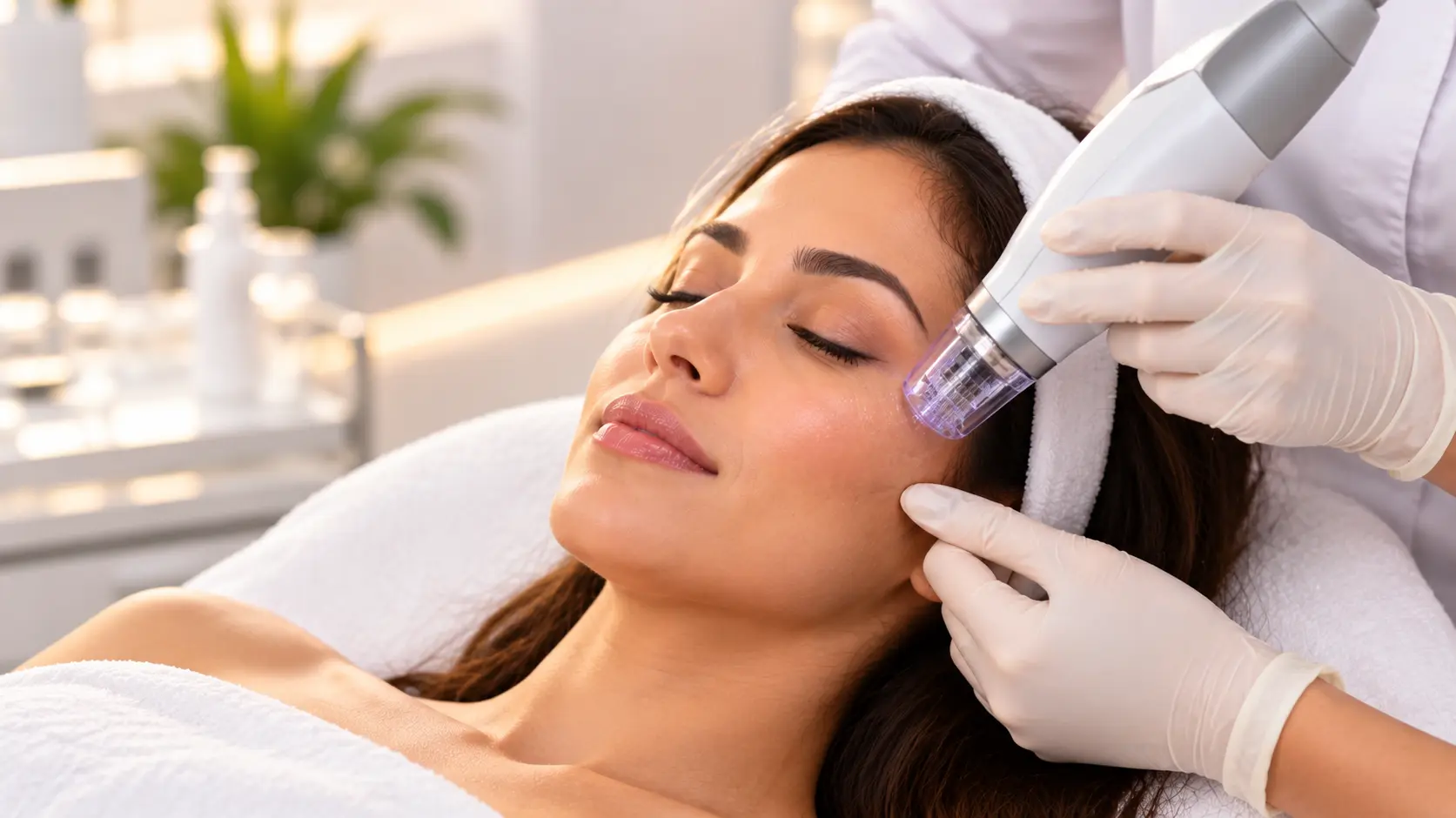
RF microneedling is a minimally invasive skin-resurfacing treatment that uses small needles to create controlled microchannels in the skin while simultaneously delivering radiofrequency energy beneath the surface.

The microneedles create tiny controlled injuries that activate the body’s natural healing response. At the same time, RF energy heats targeted tissue to support collagen and elastin remodeling.

As new collagen develops, the skin may gradually appear smoother, firmer, and more even. Because collagen remodeling takes time, improvements usually develop progressively rather than immediately.

Glo & Glam’s VirtueRF system combines microneedling with controlled RF energy and offers customizable treatment depths for different facial and body concerns. Its SmartRF handpiece is specifically designed for facial rejuvenation and can be used for concerns including acne scars, uneven texture, enlarged pores, and fine lines.

Does RF Microneedling Work on Acne Scars?

A common question is, does RF microneedling work on acne scars?

Research indicates that fractional RF microneedling can improve the appearance of acne scarring, particularly depressed scars associated with changes in collagen structure. A 2025 systematic review examining 16 studies involving 481 patients concluded that fractional radiofrequency microneedling is likely effective for acne scarring, while also noting that additional randomized trials are needed to determine the best treatment parameters.

The American Academy of Dermatology explains that radiofrequency treatments can stimulate collagen and elastin, and that combining RF with microneedling can make acne scars less noticeable.

However, results depend on the type and severity of your scars. Rolling, boxcar, and certain other depressed scars may respond differently, while some scars may require a combination of procedures rather than one treatment alone.

An evaluation is therefore important before choosing RF microneedling.

How Does RF Microneedling Improve Acne Scars?

Acne scars often develop because the skin does not produce the right amount or arrangement of collagen while healing from inflammation. Depressed scars can occur when too little collagen is produced after an acne lesion heals.

RF microneedling works by encouraging a controlled remodeling response.

The process generally involves:

  1. Microneedling: Tiny needles create controlled microchannels in the skin.
  2. Radiofrequency delivery: RF energy is delivered beneath the surface at selected depths.
  3. Healing response: The skin responds by initiating repair and remodeling processes.
  4. Collagen remodeling: New collagen and elastin develop gradually over time.
  5. Texture improvement: As the skin remodels, scars may appear softer and less defined.

The goal is not to erase every scar completely, but to reduce the visibility of scarring and improve overall skin texture.

RF Microneedling vs Regular Microneedling

When comparing RF microneedling vs regular microneedling, the main difference is the addition of radiofrequency energy.

Regular microneedling relies primarily on controlled micro-injuries to stimulate collagen production. RF microneedling adds controlled thermal energy beneath the skin while the needles are inserted.

The American Academy of Dermatology describes RF microneedling as microneedling that adds heat to the treatment. It notes that RF microneedling may enhance collagen production and can be used for acne scars.

That does not automatically mean RF microneedling is appropriate for every patient. Treatment depth, energy settings, skin type, scar characteristics, and desired outcome all influence which approach makes sense.

At Glo & Glam, the provider determines the appropriate handpiece, depth, and energy settings based on the individual’s skin and goals.

How Many RF Microneedling Sessions for Acne Scars?

Another major question is how many RF microneedling sessions for acne scars are needed.

There is no universal number because acne scars vary considerably. Treatment plans are often based on scar depth, skin condition, treatment intensity, and how the skin responds.

Glo & Glam states that many patients benefit from a series of three to four treatments, typically spaced about four to six weeks apart. Maintenance treatments may also be recommended depending on individual needs.

Multiple sessions are common because collagen remodeling is gradual. A series of treatments allows the skin to undergo repeated controlled stimulation rather than relying on one aggressive procedure.

Your provider may also recommend a different approach if your scars are particularly deep or if another procedure is better suited to the scar type.

RF Microneedling Results: When Will You See Improvement?

RF microneedling does not produce its full effect immediately.

You may notice temporary skin smoothness or an early glow after treatment, but more meaningful changes develop as collagen and elastin remodel.

Glo & Glam reports that results may become increasingly noticeable over approximately four to six weeks and can continue improving for several months.

A realistic timeline may look like this:

Immediately after treatment: Redness, warmth, mild swelling, sensitivity, or pinpoint marks may occur.

First few days: The skin gradually settles, although some dryness or light flaking may remain.

Several weeks: Early improvements in texture may become easier to see.

One to several months: Collagen remodeling can continue, allowing acne-scar texture and overall skin quality to progressively improve.

Individual results vary, and before-and-after photographs taken under consistent conditions can be useful for tracking progress.

RF Microneedling Downtime and Recovery

One of the advantages of RF microneedling is that it generally involves less downtime than some more aggressive resurfacing procedures.

The RF microneedling downtime and recovery period varies by treatment intensity and individual skin response. Temporary redness, swelling, warmth, sensitivity, pinpoint marks, dryness, and light flaking can occur. Glo & Glam states that redness often improves within several hours, although sensitivity or swelling can last longer after more intensive treatments.

After treatment, patients are generally advised to use gentle skincare, protect the skin from the sun, and avoid activities that create excessive heat or irritation for the recommended period.

Glo & Glam specifically recommends avoiding makeup for approximately 24 hours, using gentle cleanser and moisturizer, applying broad-spectrum sunscreen, limiting direct sun exposure, and avoiding strenuous exercise, saunas, excessive heat, retinoids, exfoliants, and acids until cleared by the provider.

Always follow the personalized aftercare instructions given for your skin.

Can RF Microneedling Be Combined With Other Treatments?

Some acne-scar patients benefit from combination treatment because different procedures address different aspects of scarring.

The American Academy of Dermatology notes that microneedling may be combined with treatments such as radiofrequency, chemical peels, or platelet-rich plasma. It also notes that PRP may be used alongside microneedling to enhance results in some patients.

Glo & Glam also offers PRP/PRF EZ Gel as a separate regenerative treatment. Whether PRP or another combination approach makes sense depends on the patient’s skin, scar characteristics, medical history, and treatment goals.

The objective is to create a treatment plan that addresses the actual cause and appearance of the skin concern rather than automatically adding procedures.

RF Microneedling in Arlington, TX

For people searching for RF microneedling Arlington TX, Glo & Glam provides VirtueRF treatments at its Viridian/Arlington location.

The Arlington office is located at 4080 North Collins Street, Suite 100, Arlington, TX 76005. Glo & Glam also has a Colleyville location.

You can explore Glo & Glam’s locations to learn more about the Arlington and Colleyville offices.

You can also visit the dedicated RF microneedling treatment page to review the treatment process and available VirtueRF options.

For additional offers, you can check the Glo & Glam specials. Promotions can change, and eligibility may vary by treatment.

Is RF Microneedling Right for Your Acne Scars?

RF microneedling may be a useful option for people who want to improve depressed acne scars, uneven texture, enlarged pores, or other signs of skin damage.

However, not every acne scar responds the same way. The American Academy of Dermatology recommends an individualized approach based on scar type, severity, skin characteristics, and whether active acne is still present.

A consultation can help determine whether RF microneedling is appropriate and whether another procedure or combination treatment could provide a better fit.

To learn more about Glo & Glam’s aesthetic and skincare services, visit the Glo & Glam website.

Frequently Asked Questions

1. Does RF microneedling work on acne scars?

RF microneedling can improve the appearance of many acne scars by stimulating collagen and elastin remodeling. Research supports its potential effectiveness, particularly for depressed acne scars, although results vary by scar type and patient.

2. How many RF microneedling sessions are needed for acne scars?

The number of treatments depends on scar severity, skin condition, treatment settings, and individual response. Glo & Glam states that many patients benefit from approximately three to four treatments spaced four to six weeks apart.

3. What is the difference between RF microneedling and regular microneedling?

Regular microneedling uses controlled micro-injuries to stimulate collagen, while RF microneedling combines those microchannels with radiofrequency energy delivered beneath the skin. The added energy provides another mechanism for controlled collagen remodeling.

4. What is RF microneedling downtime and recovery like?

Downtime is generally limited, but temporary redness, swelling, sensitivity, warmth, pinpoint marks, dryness, or light flaking can occur. Glo & Glam notes that redness often improves within several hours, while some sensitivity or swelling may last longer.

5. When will I see results from RF microneedling?

Some people notice an early glow or smoother appearance soon after treatment, but collagen remodeling takes time. Glo & Glam states that more noticeable improvements may develop over four to six weeks and continue improving for several months.

6. Is RF microneedling safe for different skin tones?

The American Academy of Dermatology states that radiofrequency microneedling is considered safe for all skin tones. However, treatment settings should still be customized to the individual’s skin and condition by an appropriately trained professional.

7. Can RF microneedling completely remove acne scars?

RF microneedling is intended to reduce the appearance of acne scars rather than guarantee complete removal. The amount of improvement depends on the scar type, depth, age, skin condition, and treatment plan. Some patients may benefit from combining RF microneedling with other treatments.

Peptide Therapy Explained: Benefits, Uses & What to Expect

Peptide therapy has become increasingly popular among people interested in recovery, wellness, sleep, body composition, and healthy aging. But with so much information online, it can be difficult to understand what peptide therapy actually is, which benefits are supported by evidence, and what you should expect from treatment.

So, what is peptide therapy? Peptides are short chains of amino acids that can act as signaling molecules in the body. Different peptides interact with different biological pathways, which means their potential uses, benefits, and risks can vary significantly. Some peptide-based medications are FDA-approved for specific medical conditions, while many peptides promoted in wellness settings remain investigational.

At Glo & Glam, peptide programs begin with a personalized medical consultation that considers your health history, medications, goals, potential risks, available evidence, and appropriate alternatives.

What Is Peptide Therapy?

Peptide therapy uses specific peptides with the goal of influencing biological signaling pathways involved in processes such as metabolism, tissue repair, recovery, and other physiological functions.

Unlike a single treatment designed to address everyone in the same way, peptide therapy can involve different compounds depending on the patient’s goals. This is important because peptides are not interchangeable, and the evidence for one peptide does not automatically apply to another.

Glo & Glam notes that commonly discussed compounds such as BPC-157 and CJC-1295 are investigational and not FDA-approved medications. The practice therefore emphasizes individualized evaluation rather than treating peptide therapy as a one-size-fits-all solution.

Peptide Therapy Benefits for Recovery

One of the most common reasons people explore peptide therapy is recovery. Active individuals may be interested in supporting their body’s recovery following exercise or periods of physical stress.

Certain investigational peptides are promoted for goals such as exercise recovery, mobility, soft-tissue wellness, and maintaining an active lifestyle. However, it is important to distinguish these wellness goals from proven medical indications. For example, Glo & Glam states that early research involving BPC-157 has explored tissue-repair pathways, but adequate human clinical trials have not established that it safely or effectively treats injuries, pain, inflammation, or other medical conditions.

This means peptide therapy for recovery and sleep should be approached as an individualized wellness discussion rather than a guaranteed performance or recovery solution.

Recovery also depends on fundamentals such as adequate nutrition, hydration, physical activity, stress management, and quality sleep. Peptide therapy should not be viewed as a replacement for these foundations.

Peptide Therapy and Sleep

Sleep is another area frequently discussed in connection with peptide therapy. People may seek treatment because they want to improve overall wellness, recovery, or nighttime rest.

However, the evidence behind individual peptides for sleep can vary substantially. A peptide that affects one biological pathway may not necessarily improve sleep quality, and investigational compounds can have uncertain long-term safety profiles.

For this reason, a proper consultation should include a discussion about your current sleep habits, medications, medical history, and possible causes of poor sleep before considering peptide treatment.

Rather than focusing only on the name of a peptide, the more useful question is whether there is a medically appropriate reason to consider a particular therapy and whether the potential benefits outweigh the risks.

Peptides for Anti-Aging and Healthy Aging

The phrase peptides for anti-aging encompasses a broad range of products and claims. Some peptides are being studied for their possible effects on cellular signaling, tissue repair, skin health, metabolism, or other age-related processes.

Research into therapeutic peptides and healthy aging is active, but the evidence differs considerably between compounds. A recent review found that FDA-approved peptide medicines have stronger clinical evidence, while several non-approved peptides have promising laboratory or limited clinical findings but lack long-term safety data and systematic validation.

Therefore, peptide therapy should not be presented as a way to reverse aging or guarantee specific cosmetic or longevity outcomes.

Peptide therapy is an emerging wellness approach that focuses on using specific peptides to support targeted functions within the body, depending on an individual’s health goals and treatment plan. Whether you’re exploring options related to recovery, sleep, metabolism, or healthy aging, understanding the specific peptide being considered and its potential benefits is an important part of the process. Learn more about peptide therapy at Glo & Glam and explore how a personalized treatment approach may fit your wellness goals.

What Can You Expect During Peptide Therapy?

The exact process depends on the peptide and treatment plan. A professional consultation generally comes first, allowing the provider to review your goals, health history, medications, and relevant risk factors.

The provider may discuss:

  • Your primary wellness or recovery goals
  • Relevant medical history and current medications
  • Potential benefits and limitations
  • Possible side effects and contraindications
  • Whether the proposed peptide is FDA-approved or investigational
  • Appropriate alternatives
  • How progress should be monitored

Glo & Glam describes its peptide program as personalized and states that treatment decisions are based on medical consultation, available evidence, potential risks, and appropriate alternatives.

This individualized approach is important because two people with similar wellness goals may not have the same medical considerations.

Is Peptide Therapy Safe?

The answer to is peptide therapy safe is not simply yes or no. Safety depends heavily on the specific peptide, dose, route of administration, source, patient, and whether the product has been adequately studied.

The FDA warns that compounded drugs are not FDA-approved and are not reviewed by the agency for safety, effectiveness, or quality before marketing. Poor compounding practices can also result in contamination, incorrect strength, or other quality problems.

The FDA has specifically identified safety concerns or limited safety information for a number of compounded peptides commonly discussed in wellness settings, including BPC-157, CJC-1295, ipamorelin, GHRP-2, GHRP-6, and others. The concerns include issues such as immunogenicity, peptide impurities, limited human data, and reported adverse events for certain compounds.

That is why peptide therapy should involve qualified medical oversight rather than purchasing or using unverified products independently.

Peptide Therapy in Arlington, TX

For individuals searching for peptide therapy Arlington TX, Glo & Glam offers personalized peptide programs and serves patients through its Arlington and Colleyville locations. The practice lists its Viridian/Arlington location at 4080 North Collins Street, Suite 100, Arlington, TX 76005.

You can review Glo & Glam’s locations to explore the available offices and determine which location is most convenient.

Before beginning peptide therapy, a consultation can help establish whether a particular treatment aligns with your goals and whether there are safer or better-supported alternatives.

Is Peptide Therapy Right for You?

The potential peptide therapy benefits depend on the particular peptide and the reason it is being considered. Peptide therapy may be discussed in the context of recovery, wellness, body composition, sleep, or healthy aging, but not every peptide has the same level of scientific evidence.

A thoughtful treatment plan should balance potential benefits with known risks, limitations in the research, and your individual health profile.

Glo & Glam offers medical wellness and aesthetic services designed around individualized treatment goals. You can learn more about its services through the Glo & Glam website.

Before scheduling treatment, patients can also review current Glo & Glam specials to see available qualifying offers. Promotions, eligibility, and availability can change over time.

Frequently Asked Questions

1. What is peptide therapy?

Peptide therapy uses specific peptides to influence biological signaling pathways in the body. Different peptides have different proposed mechanisms, uses, and safety considerations. Some peptide medications are FDA-approved for specific conditions, while others discussed in wellness settings remain investigational.

2. What are the potential peptide therapy benefits?

Potential benefits depend on the specific peptide and treatment goal. Peptide therapy is commonly discussed in relation to recovery, wellness, metabolism, sleep, and healthy aging. However, many commonly marketed peptides do not have enough high-quality human evidence to guarantee specific outcomes.

3. Can peptide therapy help with recovery and sleep?

Some people explore peptide therapy for recovery and sleep-related wellness goals. However, evidence varies between individual peptides, and investigational peptides should not be assumed to treat sleep disorders or injuries. A medical consultation can help identify appropriate treatment options.

4. Are peptides effective for anti-aging?

Some peptides are being studied for potential roles in healthy aging, tissue repair, metabolic health, and skin-related processes. However, evidence varies widely, and many non-approved peptides lack long-term human safety and effectiveness data.

5. Is peptide therapy safe?

Safety depends on the particular peptide, formulation, dose, administration method, and patient. The FDA has identified safety and quality concerns involving some compounded peptides, while compounded drugs themselves are not FDA-approved. Medical supervision and appropriate product sourcing are therefore important.

6. Where can I find peptide therapy in Arlington, TX?

Glo & Glam provides personalized peptide therapy services and serves Arlington and Colleyville. Its Viridian/Arlington location is at 4080 North Collins Street, Suite 100, Arlington, TX 76005. Patients can schedule a consultation to discuss their goals and whether peptide therapy is appropriate.

PRP Hair Restoration: A Non-Surgical Solution for Thinning Hair

Hair thinning can happen gradually, making it difficult to know when to seek treatment. You may notice more hair in your brush, a widening part, reduced volume around the crown, or a receding hairline. For people looking for a non-surgical approach, PRP for hair loss has become an increasingly popular option.

Platelet-rich plasma, or PRP, uses a concentrated portion of your own blood to deliver platelets and growth factors to targeted areas of the scalp. The goal is to support the health of existing hair follicles and encourage stronger, thicker hair growth. Research has found potential benefits for androgenetic alopecia, although outcomes vary and treatment protocols are not standardized.

Glo & Glam offers personalized hair restoration solutions designed around individual hair-loss concerns. Learn more about Glo & Glam and the regenerative treatments available for your aesthetic and wellness goals.

What Is PRP for Hair Loss?

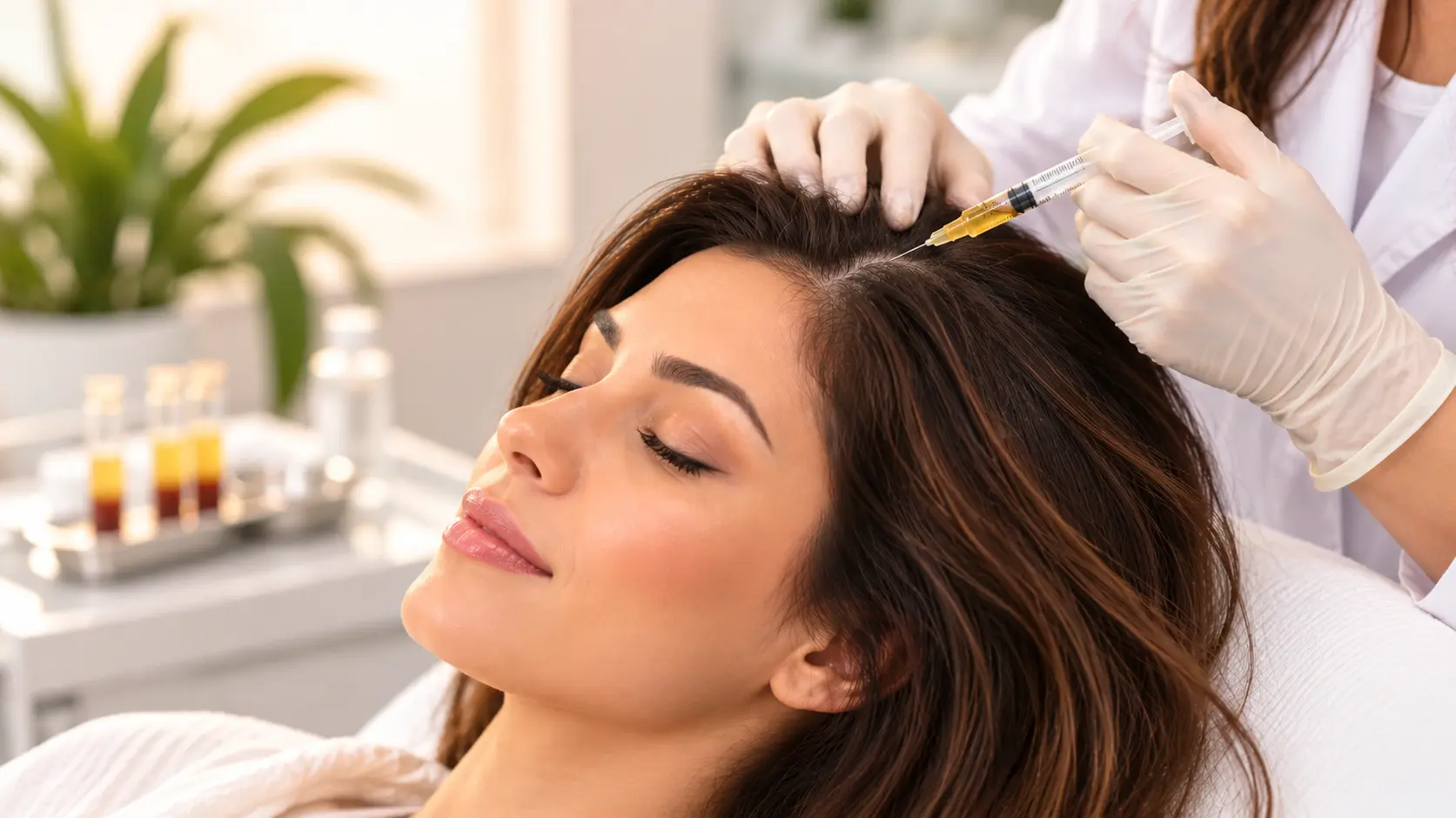
PRP therapy begins with a small blood draw, generally from your arm. The blood is processed in a centrifuge to concentrate the platelet-rich portion. This PRP is then prepared for injection into areas of the scalp affected by thinning.

Platelets contain growth factors and other signaling proteins involved in tissue repair. When PRP is injected into the scalp, the intended effect is to create an environment that supports the function of existing hair follicles.

PRP is not a hair transplant and does not create new follicles where none exist. Instead, it is generally used to support follicles that are still present but producing thinner or weaker hairs.

Does PRP Work for Thinning Hair?

So, does PRP work for thinning hair? Research suggests that it can help some people, particularly those with androgenetic alopecia, also known as pattern hair loss.

Several systematic reviews and meta-analyses have reported improvements in hair density after PRP treatment compared with control groups. However, researchers have also noted substantial differences between studies, including how PRP is prepared, how frequently treatments are performed, and how outcomes are measured.

This means PRP should not be viewed as a guaranteed solution. The potential benefit depends on factors such as the cause and stage of hair loss, follicle health, age, overall health, and the treatment approach used.

A consultation is important before treatment because hair thinning can have many possible causes. A medical provider may need to determine whether you are dealing with pattern hair loss, nutritional deficiencies, hormonal changes, scalp conditions, medication-related shedding, or another issue.

How Does PRP Hair Restoration Work?

The PRP process is relatively straightforward and does not involve surgery.

First, a small amount of your blood is collected. It is then processed to separate the platelet-rich plasma from other blood components. The concentrated PRP is subsequently injected into selected areas of the scalp using a fine needle.

The treatment is intended to support the follicles and improve the environment around them. Because the treatment uses your own blood product, PRP is considered an autologous treatment.

At Glo & Glam, you can explore PRP/PRF EZ Gel treatments and speak with the team about which regenerative treatment is appropriate for your individual goals. Hair-restoration PRP and aesthetic PRP applications may involve different treatment approaches, so your consultation should focus specifically on your hair-loss concerns.

PRP Hair Restoration Results Timeline

One of the most common questions is how quickly PRP works. Hair grows slowly, so visible changes generally do not happen immediately.

The PRP hair restoration results timeline can vary, but many treatment protocols evaluate progress over several months rather than several days or weeks. Cleveland Clinic notes that improvement may begin around three months, with continued changes over a longer period.

A general timeline may look like this:

First few weeks: The scalp may experience temporary tenderness, redness, or mild swelling after injections. There may not be a visible difference in hair density.

Around 1–3 months: Some patients may begin noticing changes in shedding or hair texture, although noticeable growth may still be limited.

Around 3–6 months: Changes in thickness or density may become easier to evaluate.

6–12 months: Continued improvement may occur depending on the individual’s response and overall hair-restoration plan.

These timeframes are estimates rather than guarantees. Your provider may use photographs or other assessments to compare changes over time.

How Many PRP Sessions for Hair?

Another frequently asked question is, how many PRP sessions for hair are usually needed?

There is no universal treatment schedule that works for everyone. Many clinical protocols use an initial series of treatments spaced several weeks apart, followed by maintenance treatments depending on the individual’s response.

For example, Cleveland Clinic describes a protocol involving monthly treatments for three months followed by less frequent maintenance treatments. Other studies have used different schedules.

Because PRP preparation methods and protocols differ significantly across studies, your provider should determine the appropriate number of sessions after evaluating your hair-loss pattern and goals.

It is also important to understand that maintenance may be recommended because PRP does not permanently stop the biological processes responsible for pattern hair loss.

PRP as a Hair Loss Treatment for Women

Hair thinning is not exclusively a men’s health concern. Women can experience noticeable thinning for several reasons, including female pattern hair loss, hormonal changes, nutritional deficiencies, stress, and other medical conditions.

For women considering a hair loss treatment for women, identifying the cause of hair loss is particularly important before beginning any regenerative treatment. PRP may be considered for appropriate candidates, but it should be part of an individualized treatment plan rather than a one-size-fits-all solution.

If you are experiencing progressive thinning, excessive shedding, or changes in your hairline or part, a professional evaluation can help determine whether PRP is appropriate and whether additional treatments or testing may be needed.

Is PRP a Non-Surgical Hair Restoration Option?

PRP is considered a minimally invasive treatment rather than a surgical hair-restoration procedure. It does not require incisions, graft placement, or a traditional hair transplant.

The treatment uses injections to deliver PRP to targeted scalp areas. Some patients experience temporary discomfort, redness, swelling, bruising, or tenderness following treatment.

The benefit of choosing a minimally invasive approach is that it can be performed without the recovery process associated with hair-transplant surgery. However, minimally invasive does not mean risk-free or appropriate for everyone.

The team at Glo & Glam emphasizes individualized treatment planning and notes that PRP and PRF hair-restoration treatments do not guarantee reduced shedding, increased density, or hair regrowth.

PRP Hair Restoration in Arlington, TX

For people researching hair restoration Arlington TX, Glo & Glam provides hair-restoration services in its Viridian/Arlington location as well as Colleyville.

The Arlington location is designed to provide personalized aesthetic and wellness services, including hair restoration therapy. You can view Glo & Glam’s locations to learn more about the Arlington and Colleyville offices.

Before deciding on treatment, a consultation can help determine whether your type of hair loss is suitable for PRP and what kind of treatment plan may be appropriate.

You can also review current Glo & Glam specials when planning your next appointment.

What Can You Expect From PRP Hair Restoration?

PRP is best approached with realistic expectations. The goal is generally to support existing follicles and improve the appearance of thinning hair, not to guarantee complete restoration.

Some people may experience noticeable improvements in density or thickness, while others may see limited results. The underlying cause of hair loss, the amount of existing follicular activity, treatment consistency, and individual response can all influence the outcome.

For a more detailed overview, explore Glo & Glam’s hair restoration treatment and schedule a consultation to discuss your options.

Frequently Asked Questions

1. Does PRP really work for hair loss?

Research suggests PRP may improve hair density in people with androgenetic alopecia, but results are not guaranteed. Studies have used different PRP preparation methods and treatment schedules, which makes direct comparison difficult. Your response may depend on the cause and stage of your hair loss.

2. How soon will I see PRP hair restoration results?

Visible results generally take several months rather than a few weeks. Some patients may begin noticing changes around three months, with further improvement developing over six to twelve months. Your provider may use progress photographs to help track changes.

3. How many PRP sessions are needed for hair restoration?

The number of sessions varies by patient and treatment protocol. Many plans begin with multiple treatments spaced several weeks apart, followed by maintenance treatments when appropriate. A consultation is needed to determine the most suitable schedule for your hair-loss pattern.

4. Is PRP a good hair loss treatment for women?

PRP may be considered for women with certain types of hair thinning, particularly pattern hair loss. However, women can develop hair loss from many different causes, so identifying the underlying cause is important before treatment. A medical evaluation can help determine whether PRP is appropriate.

5. Is PRP hair restoration permanent?

PRP is not considered a permanent cure for hair loss. Hair thinning conditions such as androgenetic alopecia can continue over time, so some patients may require ongoing treatment or maintenance. Your provider can discuss realistic expectations based on your diagnosis and response.

6. Where can I get PRP hair restoration in Arlington, TX?

Glo & Glam provides hair-restoration services at its Viridian/Arlington location and also serves patients in Colleyville. A consultation can help determine whether PRP is appropriate for your specific hair-loss concerns and goals.

IV Therapy for Energy and Immunity: Benefits, Uses & What to Expect

Feeling run down, dehydrated, or low on energy can make it difficult to keep up with work, exercise, family responsibilities, and everyday life. While healthy nutrition, quality sleep, regular exercise, and adequate hydration remain the foundation of overall wellness, some people also explore intravenous (IV) therapy as part of a personalized wellness routine.

IV therapy benefits for energy and immunity are commonly discussed because IV treatments can provide fluids and selected vitamins or nutrients directly into the bloodstream. However, the effects depend on the individual’s needs, the ingredients used, and the reason for treatment. Evidence for routine IV vitamin therapy in otherwise healthy people is still developing, so treatment should be selected with appropriate medical guidance.

At Glo & Glam, IV therapy is part of a broader approach to wellness and regenerative medicine. Understanding how IV therapy works, its potential uses, and what to expect can help you decide whether it fits your wellness goals.

What Is IV Therapy?

IV therapy uses a small catheter placed into a vein to deliver fluids and, depending on the treatment, selected vitamins, minerals, or other nutrients. Because the ingredients enter the bloodstream directly, IV administration bypasses the digestive system.

Different IV formulations may be designed around different wellness goals. Some people may seek hydration support, while others are interested in nutrients associated with energy, recovery, or general wellness.

The specific ingredients and dosage should be determined according to the treatment plan and individual circumstances rather than using the same formula for everyone.

What Does an IV Drip Do for Your Body?

One of the most common questions people ask is, what does an IV drip do for your body?

An IV drip can provide fluids directly into the bloodstream, which can help address dehydration when oral fluid intake is inadequate or when rapid rehydration is clinically appropriate. Dehydration can contribute to fatigue, headaches, dizziness, and reduced physical performance.

When vitamins or minerals are included, the goal may be to provide specific nutrients through intravenous administration. Some wellness IV formulas may include nutrients such as B vitamins, vitamin C, magnesium, or other ingredients depending on the provider’s protocol.

It is important to understand that IV therapy is not a replacement for a nutritious diet or treatment for every cause of fatigue. Persistent tiredness may have an underlying cause that requires an evaluation by a healthcare professional.

IV Therapy Benefits for Energy and Immunity

The potential IV therapy benefits for energy and immunity are among the main reasons people explore these treatments.

Energy Support

Dehydration can contribute to feelings of tiredness and reduced physical performance. Rehydration may therefore help someone who is experiencing fatigue associated with fluid loss.

Certain vitamins, including B vitamins, are also involved in normal energy metabolism. However, receiving more vitamins than the body needs does not necessarily produce a greater energy boost. The benefit of supplementation depends on factors such as nutritional status and individual health needs.

For people experiencing ongoing fatigue, IV therapy should not be used as a way to mask symptoms without investigating possible underlying causes.

Immune Wellness

Vitamins and minerals play important roles in normal immune function. This is one reason IV wellness treatments are sometimes marketed for immunity support.

However, it is important to separate immune support from claims about preventing or curing illness. Current evidence does not establish routine IV vitamin therapy as a universal way to prevent infections or strengthen immunity in healthy people. Cleveland Clinic notes that evidence for many wellness-related IV vitamin claims remains limited and continues to be studied.

A balanced diet, adequate sleep, regular exercise, stress management, and appropriate medical care remain important parts of maintaining immune health.

Vitamin IV Drip Benefits: What Can You Expect?

People often search for vitamin IV drip benefits when considering IV therapy for wellness or recovery.

Depending on the formula and individual needs, potential benefits may include:

  • Supporting hydration when fluid replacement is appropriate
  • Providing selected vitamins and minerals intravenously
  • Supporting normal nutrient availability
  • Helping address symptoms associated with dehydration
  • Providing a convenient wellness treatment for people with specific goals

The actual experience can vary significantly from one person to another. Some people may notice a feeling of improved hydration or energy afterward, while others may notice little immediate difference.

Because IV treatment places substances directly into the bloodstream, more is not automatically better. Certain vitamins can cause toxicity when taken in excessive amounts, and IV fluids can present risks for some individuals.

IV Therapy for Hangover Relief

Another commonly requested treatment is IV therapy for hangover symptoms.

Alcohol consumption can contribute to fluid loss and may leave people experiencing symptoms such as headache, fatigue, nausea, and general discomfort. IV fluids may help address dehydration, but IV therapy does not eliminate alcohol’s effects or serve as a guaranteed cure for a hangover.

A hangover treatment may focus on hydration and, depending on the provider and clinical assessment, selected nutrients or medications. Anyone experiencing severe or unusual symptoms should seek appropriate medical attention rather than relying on a wellness IV.

What to Expect During an IV Therapy Session

For people considering IV hydration therapy, knowing what happens during a typical appointment can make the process easier.

You will generally begin with a consultation or screening to discuss your wellness goals, medical history, medications, allergies, and other relevant information. A qualified healthcare professional then selects an appropriate treatment plan.

The IV catheter is placed into a vein, commonly in the arm, and the selected fluid or nutrient solution is administered over the course of the appointment. The treatment area should be monitored throughout the session.

Afterward, many people can return to normal activities, depending on the treatment and individual circumstances.

You can explore Glo & Glam’s IV therapy services to learn more about available wellness options.

How Often Should You Get IV Therapy?

A common question is how often should you get IV therapy? There is no single schedule that is appropriate for everyone.

The frequency depends on the reason for treatment, the ingredients being administered, overall health, hydration status, and recommendations from a qualified healthcare provider. Routine IV therapy should not be based solely on the idea that more frequent treatments automatically provide greater benefits.

People with conditions involving the heart, kidneys, fluid balance, or other health considerations may need additional caution with IV fluids. Excess fluid or inappropriate nutrient dosing can cause complications.

A personalized plan is therefore more appropriate than following a fixed schedule advertised for everyone.

IV Hydration Therapy in Arlington, TX

For individuals searching for IV hydration therapy Arlington TX, choosing a provider that prioritizes appropriate screening, qualified administration, and individualized treatment is important.

IV therapy should be viewed as one component of a broader wellness strategy rather than a substitute for medical treatment, nutrition, sleep, or healthy lifestyle habits.

To explore available services and locations, visit the Glo & Glam locations page. You can also browse the full range of medspa services to see how IV therapy fits within a broader wellness experience.

Is IV Therapy Right for You?

IV therapy may be considered by adults looking for hydration support or a personalized wellness treatment, but suitability varies from person to person.

Before receiving an IV, discuss relevant medical conditions, medications, supplements, allergies, pregnancy status, and previous reactions to IV treatments with your healthcare provider. IV therapy can involve risks such as bruising, discomfort, infection at the catheter site, fluid overload, and other complications, although serious complications are uncommon when treatment is appropriately administered.

The goal should be safe, individualized care rather than simply choosing the most ingredients or the most frequent treatments.

Explore IV Therapy at Glo & Glam

Whether your goal is hydration support, wellness maintenance, or learning more about nutrient-based IV treatments, understanding the treatment before booking is an important first step.

Visit the Glo & Glam wellness and regenerative medicine services to learn more about IV therapy options. You can also see current specials and read patient reviews for additional information about the Glo & Glam experience.

Frequently Asked Questions

1. What are the main IV therapy benefits for energy and immunity?

IV therapy may provide hydration and selected nutrients directly into the bloodstream. Hydration can help when dehydration contributes to fatigue, while certain vitamins and minerals play roles in normal energy metabolism and immune function. However, evidence for routine IV vitamin therapy as a general energy or immunity booster remains limited, so individual results can vary.

2. What does an IV drip do for your body?

An IV drip delivers fluids directly into a vein and may also contain selected vitamins, minerals, or other nutrients. IV fluids can help prevent or treat dehydration and electrolyte imbalances when clinically appropriate. The exact effect depends on the ingredients used and the individual’s health needs.

3. Can IV therapy help with a hangover?

IV therapy for hangover symptoms may help address dehydration and may provide temporary symptom support. However, it does not reverse alcohol’s effects or guarantee a hangover cure. Severe symptoms or symptoms that seem unusual should be medically evaluated rather than treated solely with a wellness IV.

4. What are the vitamin IV drip benefits?

Potential benefits depend on the nutrients included and the person’s individual needs. Some IV formulas are designed to provide hydration and nutrients such as certain vitamins and minerals. IV treatment should be personalized because excessive doses of some nutrients can cause adverse effects or toxicity.

5. How often should you get IV therapy?

There is no universal schedule for IV therapy. Frequency should be based on your treatment goals, health status, nutritional needs, and guidance from a qualified provider. More frequent treatment is not automatically better, particularly for people who may be sensitive to fluid or nutrient changes.

6. Is IV hydration therapy safe?

IV hydration is a common medical procedure, but it is not completely risk-free. Possible complications include discomfort or bruising at the insertion site, infection, fluid overload, and other reactions. Proper screening and administration by qualified healthcare professionals can help reduce these risks.

7. How long does an IV therapy session take?

Treatment time varies depending on the IV formula, fluid volume, and the provider’s protocol. Your provider can explain the expected session length before treatment begins and monitor you while the IV is administered.

HydraFacial vs. Regular Facial: What’s the Difference and Which Is Worth It?

Anyone researching facials for the first time in a while will notice a new option showing up alongside the classic version: the HydraFacial. Both promise cleaner, brighter, more hydrated skin, but they get there in different ways, and the right choice depends on your skin type, goals, and how much time you want to spend in the chair.

This guide breaks down what a HydraFacial vs. regular facial actually involves, how they compare on technique, results, and cost, and how to decide which is worth it for your skin.

At Glo & Glam MedSpa & Skin Care, both treatments are available and can be tailored to your specific skin concerns during a consultation.

What Is a Regular Facial?

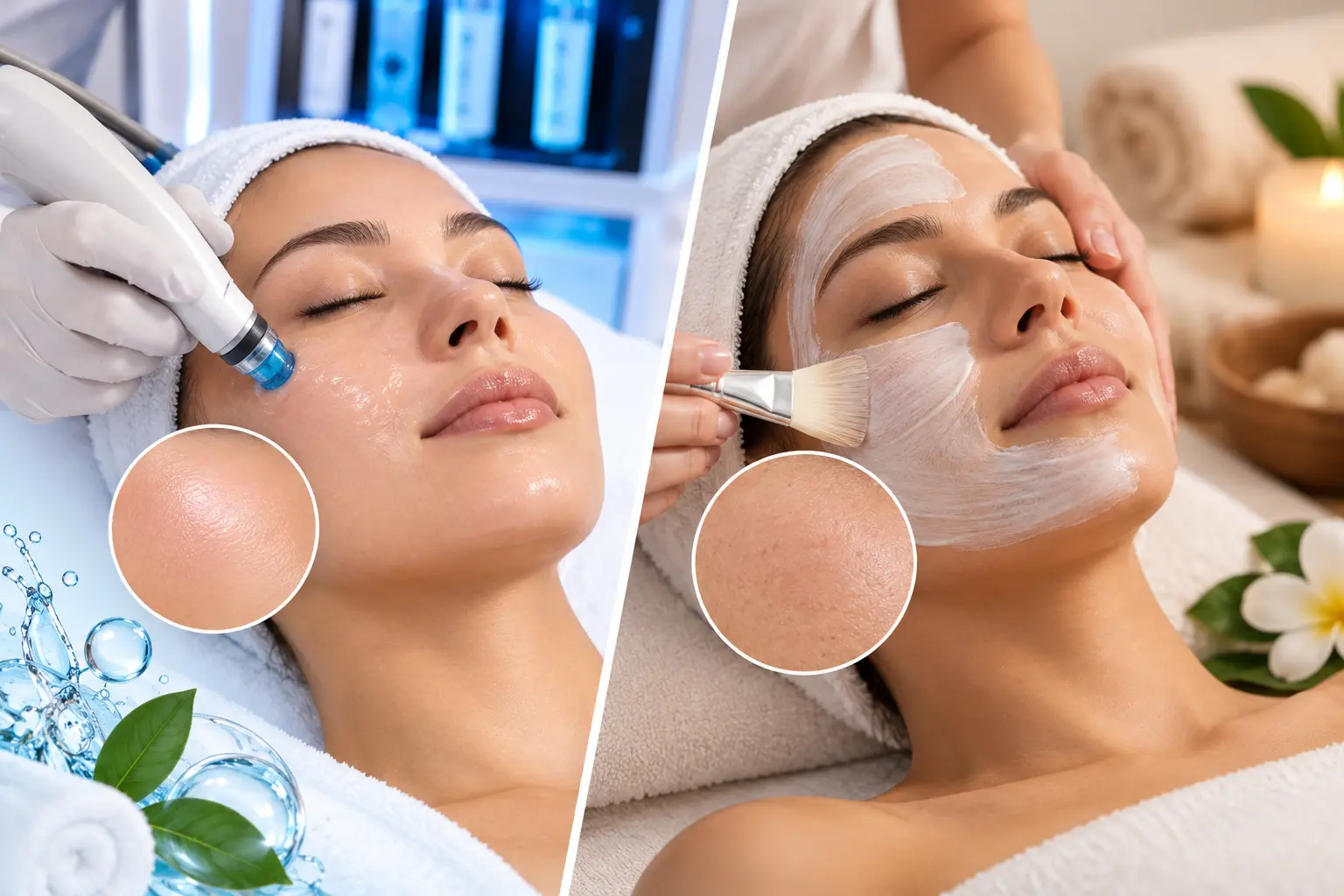
A regular facial, sometimes called a classic or traditional facial, is performed by hand by a licensed esthetician using a combination of techniques and products suited to your skin type. A typical session includes:

     ● Cleansing to remove makeup, dirt, and surface impurities
     ● Exfoliation, using a scrub or enzyme peel to slough off dead skin cells
     ● Steam, to help open pores ahead of extractions
     ● Manual extractions to clear blackheads and congestion
     ● A mask suited to your skin’s needs, such as hydrating, purifying, or calming
     ● Massage and moisturizer to finish

Because a regular facial is performed by hand, it allows for real-time adjustments. An experienced esthetician can read your skin as they go and adapt the treatment accordingly, which is part of why many people prefer the hands-on, personalized nature of a traditional facial.

What Is a HydraFacial?

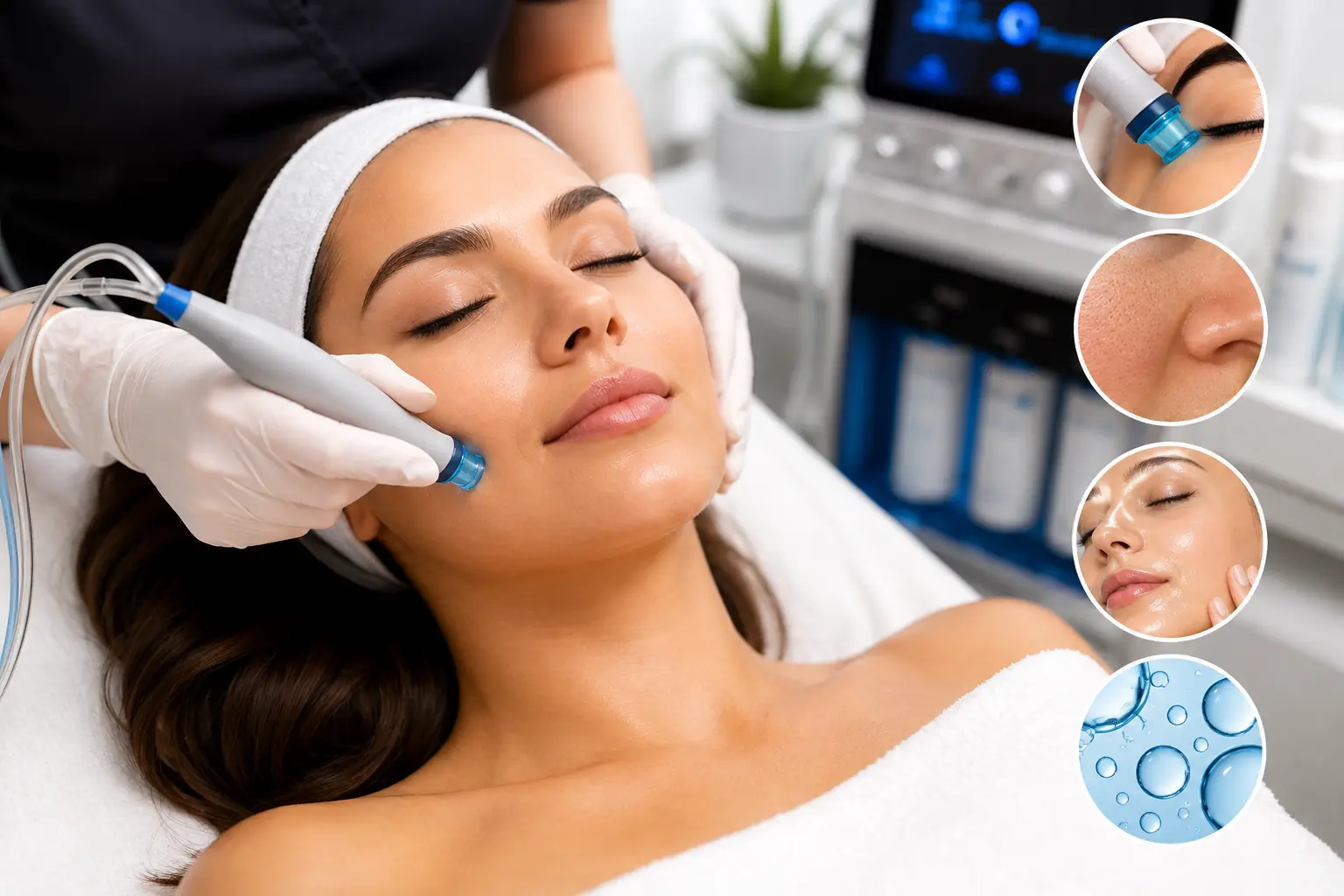
HydraFacial is a branded, technology-driven treatment that combines cleansing, exfoliation, extraction, and hydration into one device-led process. Instead of manual extractions, it uses a vortex suction tip to lift debris from pores while simultaneously infusing the skin with serums.

The treatment follows a consistent, repeatable protocol, which is part of why it has become so widely adopted. According to US Dermatology Partners, board-certified dermatologist Dr. Jennifer Holman notes that people tend to favor the gentler approach of a HydraFacial and the results it produces, and that an estimated HydraFacial treatment is performed somewhere in the world roughly every 15 seconds.

Learn more about the HydraFacial treatment offered at Glo & Glam.

HydraFacial vs. Regular Facial: Key Differences

Technique: Technology vs. Manual Approach

A HydraFacial relies on a device to perform each step, which keeps the process consistent from session to session. A regular facial depends on the esthetician’s hands, tools, and judgment, which allows for more intuitive adjustments but means results can vary more depending on who performs it and how your skin responds that day.

Extractions and Comfort

Manual extractions during a traditional facial can be the least comfortable part of the process and sometimes lead to temporary redness afterward. HydraFacial’s suction-based extraction method is generally described as more comfortable, with less risk of post-treatment irritation.

Downtime and Results Timeline

HydraFacial typically produces visible results the same day, with little to no downtime. Regular facials also produce noticeable improvements, but results, particularly after extractions, may take a day or two to fully settle.

Customization

Both treatments can be customized. A regular facial is adjusted based on the esthetician’s real-time assessment of your skin, while a HydraFacial is customized through targeted serums and optional boosters addressing specific concerns like hyperpigmentation, congestion, or fine lines.

Which Is Better for Your Skin?

Neither treatment is universally “better” — the right choice depends on your skin and what you want out of the appointment.

● If you want a fast, low-irritation treatment with same-day glow and minimal discomfort, a HydraFacial is often the more predictable choice.
● If you have specific, stubborn congestion that benefits from a skilled esthetician’s hands-on assessment, or you prefer a more personalized, spa-style experience, a regular facial may be the better fit.
● If you’re dealing with more significant concerns like sun damage, acne scarring, or uneven texture, a deeper treatment such as a chemical peel or microneedling may deliver more noticeable change than either facial option alone.

A consultation is the most reliable way to determine which option, or combination, fits your skin.

What Does a HydraFacial Cost Compared to a Regular Facial?

Pricing for both treatments varies based on the provider, the specific protocol used, and whether add-on serums or boosters are included. HydraFacial treatments are generally priced higher than a basic regular facial due to the technology and serums involved, though a more customized or advanced traditional facial can narrow that gap.

Because pricing depends on the specific treatment plan, it’s best to request current pricing directly rather than relying on a general estimate. Patients interested in regular treatments may also want to review Glo & Glam memberships or current specials for potential savings.

HydraFacial and Facials in Arlington & Colleyville: What Should You Look For?

Anyone searching for a facial treatment in Arlington, TX should look for a provider that takes the time to assess your skin before recommending a treatment, rather than defaulting to the same service for every client. A good consultation should cover your skin type, current concerns, treatment history, and goals.

Glo & Glam has locations in Viridian/Arlington and Colleyville, both offering HydraFacial and traditional facials, with providers who can help determine which is the better starting point for your skin.

How to Prepare for Your Consultation

A quick consultation before booking can help you avoid guessing between treatments. Consider asking:

1. Which treatment is better suited to my skin type and current concerns?

2. How often should I schedule facials to maintain results?

3. Are there boosters or add-ons that would benefit my skin specifically?

4. What results are realistic after one session versus a series?

5. Would a deeper treatment, like a chemical peel, better address my main concern?

A knowledgeable provider should be able to explain the reasoning behind their recommendation rather than steering you toward one default treatment.

Final Thoughts

Both a HydraFacial and a regular facial can leave your skin cleaner, brighter, and more hydrated, the difference comes down to technique, comfort, and how quickly you want to see results. A HydraFacial offers a consistent, technology-driven process with same-day glow, while a traditional facial offers a hands-on, personalized experience that many people continue to prefer.

If you’re ready to find out which is the better fit for your skin, schedule a consultation at Glo & Glam’s Arlington or Colleyville location, or read patient reviews to see what other guests have experienced.

Frequently Asked Questions

Is a HydraFacial better than a regular facial?

Neither is universally better. HydraFacial offers a consistent, technology-driven process with minimal discomfort and same-day results, while a regular facial offers a hands-on, personalized approach. The better option depends on your skin type, concerns, and preferences.

How often should you get a HydraFacial or regular facial?

Many people schedule facials, HydraFacial or traditional, on a monthly basis to maintain results and support overall skin health, though the ideal frequency depends on your skin type and goals. A provider can recommend a schedule during your consultation.

Does a HydraFacial hurt?

HydraFacial is generally described as comfortable, often compared to a light massage. Its suction-based extraction method tends to be gentler than the manual extractions used in a traditional facial.

Can a HydraFacial replace a regular facial completely?

For many people, yes, though some prefer alternating between the two or continuing with a traditional facial for the personalized, hands-on experience it offers. The right approach depends on individual skin needs and preference.

Is HydraFacial worth the cost?

For people seeking a fast, low-irritation treatment with visible same-day results, many find the cost worthwhile. Value ultimately depends on your goals, budget, and how your skin responds to the treatment.

Where can I get a HydraFacial or facial in Arlington, TX?

Glo & Glam MedSpa & Skin Care offers both HydraFacial and traditional facials at its Viridian/Arlington location, 4080 North Collins Street, Suite 100, Arlington, TX 76005, as well as its Colleyville location.

How to Repair Sun-Damaged Skin and Restore a Healthy Glow

Years of sun exposure add up, even when it doesn’t feel that way at the time. Dark spots, rough texture, fine lines, and a dull or uneven skin tone are common signs that skin has absorbed more UV damage than it can repair on its own. For anyone wondering how to repair sun damaged skin, the answer depends on how much damage has built up and whether it’s being addressed at the surface level or deeper in the skin.

This guide covers what sun damage actually is, what it looks like, which parts of it can realistically be improved, and the range of treatments, from daily skincare habits to in-office procedures, that can help restore a more even, healthy-looking complexion.

At Glo & Glam MedSpa & Skin Care, treatment plans for sun-damaged skin are built around each patient’s skin type, goals, and degree of damage rather than a one-size-fits-all approach.

What Is Sun-Damaged Skin (Photoaging)?

Sun-damaged skin, medically referred to as photoaging, is the premature aging of skin caused by repeated exposure to ultraviolet A (UVA) and ultraviolet B (UVB) radiation. Cleveland Clinic explains that photodamage can come from natural sun exposure or artificial UV sources like tanning beds, and that this exposure ages skin faster than it would naturally age while also increasing skin cancer risk.

Because this damage accumulates gradually, its effects are often not fully visible until years after the exposure occurred, which is part of why sun damage tends to catch people off guard.

What Does Sun-Damaged Skin Look Like?

Sun damage can show up in a number of ways, and most people experience a combination of the following:

● Sunspots or age spots on the face, chest, and hands
● Rough or leathery skin texture
● Fine lines and premature wrinkles
● Uneven skin tone or blotchiness
● Broken capillaries or persistent redness
● Loss of firmness or elasticity

Identifying which of these you’re dealing with is the first step toward choosing the right treatment approach.

Can Sun Damage Be Reversed?

This is one of the most common questions people have, and the honest answer is: partially. Sun damage at the cellular level isn’t something that can be completely undone, but many of its visible effects, including sunspots, rough texture, and fine lines, can be meaningfully improved.

According to Cleveland Clinic, treatment options for repairing sun-damaged skin include retinoids, lightening agents, chemical peels, laser skin resurfacing, dermabrasion, and fillers. The right combination depends on the type and depth of damage present, which is best assessed during a professional consultation.

At-Home Care for Sun-Damaged Skin

A consistent at-home routine is the foundation of any sun damage repair plan and can meaningfully slow further damage while supporting the results of in-office treatments:

● Daily broad-spectrum SPF, applied year-round and not just during outdoor activities
● Vitamin C serum, an antioxidant that can help fade discoloration and protect against future UV exposure
● Retinoids, which support cell turnover and can gradually improve texture and pigmentation
● Consistent hydration to support the skin barrier while it repairs

At-home products can improve the outermost layers of skin over time, but they generally can’t reach the deeper structural damage that more advanced sun exposure causes. For that level of correction, in-office treatment is typically needed. Medical-grade skincare lines like ZO Skin Health and SkinCeuticals are formulated for this purpose and are often built into a treatment plan alongside in-office procedures.

In-Office Treatments to Repair Sun-Damaged Skin

Professional treatments can address sun damage more directly than at-home products alone, often with visible results in a shorter timeframe.

Chemical peels remove damaged outer layers of skin, which encourages fresher, more even-toned skin to surface. Peels can be customized from a light treatment to a deeper one, depending on the degree of sun damage present.

IPL (Intense Pulsed Light) targets pigment in the skin directly, making it particularly effective for sunspots, freckling, and redness caused by broken capillaries.

Laser resurfacing addresses texture, fine lines, and deeper pigmentation at the same time, and is often recommended for patients dealing with more than surface-level discoloration.

A provider can help determine which treatment, or combination of treatments, fits your skin and goals. Learn more about the full range of options on the Lasers & Energy services page.

How Much Does Sun Damage Treatment Cost?

The cost of treating sun-damaged skin varies based on the treatment type, the size and number of areas being addressed, and how many sessions are needed to reach your goals. A single chemical peel, for example, is typically priced differently than a series of laser resurfacing sessions.

Because pricing depends on an individualized treatment plan, it’s best to request pricing after a consultation rather than relying on a general estimate. Patients interested in ongoing treatment may also want to review Glo & Glam memberships or current specials for potential savings.

Sun Damage Repair in Arlington & Colleyville: What Should You Look For?

Anyone searching for sun damage treatment in Arlington, TX should look for a provider that evaluates skin individually rather than applying the same treatment to every patient. A thorough consultation should take into account skin tone, the depth and type of sun damage, treatment goals, and any relevant medical history.

Glo & Glam has locations in Viridian/Arlington and Colleyville, both offering complimentary consultations to help determine the right treatment path.

How to Prepare for Your Consultation

Getting the most out of a consultation means going in with the right questions. Consider asking your provider:

1. Which treatment, or combination of treatments, is recommended for my skin?

2. How many sessions will I likely need to see results?

3. What should I expect during recovery, if any?

4. How should I adjust my at-home routine to support treatment?

5. What results are realistic for my level of sun damage?

6. What is the cost for individual sessions versus a treatment package?

A knowledgeable provider should be able to walk you through the reasoning behind your recommended treatment plan.

Final Thoughts

Sun damage builds up gradually, but repairing it doesn’t have to be complicated. A combination of daily sun protection, the right at-home products, and professional treatments like chemical peels, IPL, or laser resurfacing can meaningfully improve the appearance of sun-damaged skin.

If you’re ready to talk through your options, schedule a complimentary consultation at Glo & Glam’s Arlington or Colleyville location, or read patient reviews to see what others have experienced.

Frequently Asked Questions

Can sun damaged skin be repaired?

Many visible signs of sun damage, including sunspots, rough texture, and fine lines, can be meaningfully improved through a combination of at-home skincare and in-office treatments such as chemical peels, IPL, and laser resurfacing. Damage at the cellular level can’t be fully undone, but treatment can significantly improve the skin’s appearance.

How long does it take to repair sun damaged skin?

Timelines vary depending on the treatment and the extent of damage. At-home routines typically take several weeks to months to show gradual improvement, while in-office treatments like chemical peels or IPL can show visible results within days to a few weeks, often requiring a series of sessions for best results.

What is the best treatment for sun damaged skin?

There isn’t a single best treatment for everyone. Chemical peels, IPL, and laser resurfacing each address different types of damage, and a provider can recommend the right option, or combination, based on your specific skin concerns.

Can you reverse sun damage naturally?

At-home habits like daily SPF, vitamin C serums, and retinoids can improve mild sun damage over time, but they generally can’t address deeper structural changes. More significant damage typically requires professional treatment for meaningful improvement.

Does sunscreen help repair existing sun damage?

Sunscreen doesn’t repair existing damage, but it’s essential for preventing further damage while other treatments and products do the work of improving your skin’s current condition.

Where can I get sun damage treatment in Arlington, TX?

Glo & Glam MedSpa & Skin Care has a Viridian/Arlington location at 4080 North Collins Street, Suite 100, Arlington, TX 76005, as well as a Colleyville location, and offers a range of treatments for sun-damaged skin.

Laser Hair Removal Guide: Everything You Need to Know Before Treatment

Unwanted body hair can be frustrating to manage with shaving, waxing, tweezing, or depilatory creams. These methods can require frequent maintenance and may sometimes lead to razor burn, ingrown hairs, or skin irritation. Laser hair removal offers a longer-term approach by using concentrated light energy to target hair follicles and reduce future hair growth.

For anyone considering treatment, understanding how laser hair removal works, how many sessions you may need, how to prepare, what recovery involves, and what results to expect can make the process much easier. This laser hair removal guide covers the key information you should know before scheduling treatment.

At Glo & Glam MedSpa & Skin Care, laser services are part of a broader range of aesthetic treatments designed around individualized treatment plans. You can explore Glo & Glam to learn more about the practice and its approach to aesthetic care.

What Is Laser Hair Removal?

Laser hair removal is a cosmetic treatment that uses laser energy to target the pigment within hair follicles. The energy is absorbed by the follicle and converted into heat, which can impair the follicle’s ability to produce hair.

Because hair grows in different stages, a single treatment cannot effectively target every follicle at once. This is why laser hair removal is generally performed as a series of treatments spaced several weeks apart. Cleveland Clinic notes that many patients require multiple treatments, often in the range of four to six or more depending on individual factors.

Laser technology can be used on a variety of areas, including the face, underarms, bikini area, legs, arms, chest, back, and other body regions. The appropriate laser and settings depend on factors such as hair color, hair thickness, skin tone, treatment area, and individual response.

You can also learn more about Glo & Glam’s laser treatments before deciding which service may be appropriate for you.

How Does Laser Hair Removal Work?

During treatment, a laser device delivers controlled pulses of light energy to the treatment area. The pigment in the hair absorbs the energy, allowing heat to reach the follicle.

The goal is not to remove every visible hair instantly. Instead, the treatment progressively reduces active hair growth over a series of appointments. Hair that has been treated may shed gradually following the procedure, while follicles in later growth stages are addressed during subsequent sessions.

A consultation is important because laser treatment settings should be selected according to the individual’s skin and hair characteristics. Using an inappropriate wavelength or energy level can increase the risk of unwanted skin reactions, particularly pigment changes.

For treatment-specific information, visit the Glo & Glam laser hair removal service page.

How Many Laser Hair Removal Sessions Are Needed?

One of the most common questions people ask is, “how many laser hair removal sessions needed?” There is no single number that applies to everyone.

Many patients need a series of treatments rather than a single appointment. A common treatment plan involves approximately four to eight sessions, although the exact number can vary based on the treatment area, hair density, hair color, skin tone, hormonal factors, and how the individual responds to treatment.

Appointments are generally spaced several weeks apart so that different hair-growth cycles can be addressed. Facial hair may behave differently from body hair, and areas influenced by hormonal changes may require additional maintenance.

Your provider should evaluate your skin and hair during a consultation rather than promising a fixed number of treatments before seeing you.

Is Laser Hair Removal Permanent?

A common question is, “is laser hair removal permanent?”

Laser hair removal is better understood as long-term hair reduction rather than a guarantee that every treated hair will be permanently eliminated. Many patients experience a substantial and lasting decrease in hair growth after completing a treatment series, but some hair can eventually regrow.

Any regrowth is often finer or lighter than the original hair. Maintenance treatments may also be recommended over time, particularly for areas affected by hormonal changes. Cleveland Clinic notes that some patients may benefit from maintenance treatments approximately every six to twelve months.

This distinction is important when setting realistic expectations. The objective is usually significant reduction in unwanted hair and less frequent shaving or waxing, rather than an absolute guarantee of zero hair forever.

Laser Hair Removal Before and After Care

Following appropriate laser hair removal before and after care instructions can help support both treatment effectiveness and skin comfort.

Before Your Treatment

Preparation may include:

  • Avoiding tanning beds and minimizing sun exposure before treatment.
  • Avoiding waxing, tweezing, and plucking because these methods remove the hair from the follicle that the laser needs to target.
  • Shaving the treatment area as instructed by your provider.
  • Arriving with clean skin and avoiding products that may irritate the area.
  • Informing your provider about medications, skin conditions, recent tanning, or other factors that could affect treatment.

Cleveland Clinic recommends avoiding tanning and certain hair-removal methods before treatment and advises shaving the area as directed by the provider.

Your provider may give you additional instructions based on your skin type and the area being treated.

After Your Treatment

It is common to experience temporary redness, swelling, or a mild stinging sensation following laser hair removal. These effects generally settle with time.

After treatment:

  • Keep the area clean and treat the skin gently.
  • Avoid vigorous scrubbing or picking at irritated areas.
  • Minimize sun exposure while the skin is recovering.
  • Use broad-spectrum sunscreen when the treated area is exposed to sunlight.
  • Follow any product or activity restrictions provided by your treatment professional.

Sun protection is particularly important because treated skin may be more susceptible to pigment changes after laser treatment.

What Areas Can Be Treated?

Laser hair removal can be performed on many areas of the body. Common treatment areas include:

  • Upper lip and chin
  • Face and neck
  • Underarms
  • Bikini area
  • Arms
  • Legs
  • Chest and abdomen
  • Back

The treatment plan may differ depending on the body area. Facial hair, for example, can be more hormonally influenced, while larger areas such as the legs or back require more time and laser pulses.

Glo & Glam provides laser-focused aesthetic services for clients in the Arlington and Colleyville areas. Visit the laser hair removal service page to review the treatment offering.

How Much Does Laser Hair Removal Cost Per Session?

The laser hair removal cost per session can vary considerably. There is no universal price because treatment costs are influenced by the size of the area, the number of areas being treated, the technology used, the provider, and whether the patient purchases a package.

For example, smaller treatment areas generally cost less than large areas such as full legs or full back. Packages containing multiple treatments may also offer different pricing than individual appointments.

Current Arlington-area pricing examples show that costs can range from lower-priced treatments for small areas to several hundred dollars for larger treatment areas, demonstrating why patients should request individualized pricing rather than relying on a single advertised figure.

When comparing providers, consider more than the price alone. Treatment technology, provider experience, skin-type considerations, consultation quality, aftercare, and the overall treatment plan can all affect your experience and results.

You can also review Glo & Glam memberships to see whether membership options may fit your ongoing aesthetic care needs.

Laser Hair Removal in Arlington, TX: What Should You Look For?

People searching for laser hair removal Arlington TX should look for a provider that takes a personalized approach rather than offering a one-size-fits-all treatment.

A good consultation should address your skin tone, hair color, hair density, treatment goals, medical history, previous tanning or sun exposure, and any medications or skin conditions that may influence treatment.

The provider should also explain realistic results and possible side effects. Temporary irritation and pigment changes can occur, while more serious complications such as blistering or scarring are less common but possible.

Glo & Glam has an Arlington location in Viridian, as well as a Colleyville location. You can view all Glo & Glam locations to find the office that works best for you.

How to Prepare for Your First Consultation

Your consultation is an important part of the laser hair removal process. Rather than focusing only on appointment availability or cost, use the consultation to determine whether the treatment is appropriate for you.

Consider asking:

  1. Which laser technology is recommended for my skin tone and hair type?
  2. How many sessions are likely to be needed?
  3. How far apart should appointments be scheduled?
  4. What should I avoid before and after each treatment?
  5. What results should I realistically expect?
  6. Will maintenance treatments be necessary?
  7. What is the price for individual sessions and treatment packages?

A knowledgeable provider should be able to explain the reasoning behind your treatment plan clearly.

Why Professional Laser Hair Removal Can Be Worth Considering

For people who spend significant time shaving or scheduling waxing appointments, reducing unwanted hair growth can simplify their regular grooming routine.

Laser hair removal may also appeal to individuals who experience frequent razor irritation or ingrown hairs associated with shaving and waxing. However, results and candidacy vary, so an individualized assessment remains important.

The overall goal should be a treatment plan that balances effectiveness, safety, expectations, and long-term maintenance.

Final Thoughts

Laser hair removal can provide a convenient approach to long-term hair reduction, but understanding the treatment process is essential before getting started. Most people need multiple sessions because hair follicles grow at different stages, and maintenance treatments may be needed to preserve results over time.

Proper preparation and aftercare are equally important. Protecting your skin from excessive sun exposure, avoiding waxing or plucking before treatment, following shaving instructions, and using gentle skincare afterward can help support a safer treatment experience.

If you are considering laser hair removal in Arlington, TX, start with a professional consultation and ask for a treatment plan based on your individual skin, hair, and goals. You can also view current Glo & Glam specials or read patient reviews before scheduling.

Frequently Asked Questions

How many laser hair removal sessions are usually needed?

Many people need multiple treatments, commonly around four to eight sessions, because laser energy is most effective when hair follicles are in an appropriate growth stage. The exact number varies based on the treatment area, hair characteristics, skin tone, hormonal factors, and individual response. Your provider can estimate your treatment needs during a consultation.

Is laser hair removal permanent?

Laser hair removal is generally considered long-term hair reduction rather than a guarantee of permanent removal of every hair. After a treatment series, many people experience significantly less hair growth, and remaining hair may be finer or lighter. Some patients require periodic maintenance treatments to maintain their results.

Does laser hair removal hurt?

The sensation varies from person to person and depends on the treatment area and laser technology. Many patients describe the pulses as a snapping or stinging sensation. Temporary redness, swelling, or mild discomfort can occur afterward, but these effects generally improve as the skin recovers.

What should I avoid before laser hair removal?

Avoid tanning and excessive sun exposure before treatment, and do not wax, tweeze, or pluck the hair in the treatment area because the follicle needs to remain present for the laser to target it. Shaving is commonly recommended according to your provider’s specific instructions.

How much does laser hair removal cost per session?

The cost varies according to the size and location of the treatment area, provider, technology, and whether you choose individual treatments or a package. Smaller areas generally cost less than larger areas. The best way to determine your laser hair removal cost per session is to request pricing after your treatment area and goals have been evaluated.

Can laser hair removal be performed on all skin tones?

Laser hair removal can be performed on a range of skin types, but the choice of technology and treatment settings is important. Skin tone, hair pigment, and laser type all influence safety and effectiveness. A qualified professional should assess your skin and hair before treatment and customize the settings accordingly.

How often are laser hair removal treatments scheduled?

Treatments are generally spaced several weeks apart rather than performed back-to-back. The exact schedule depends on the body area, hair-growth cycle, and your provider’s treatment plan. Following the recommended interval allows additional follicles to be treated during later stages of the hair-growth cycle.

When can I shave after laser hair removal?

Shaving is generally compatible with a laser hair removal treatment plan, unlike waxing or plucking, but your provider may recommend waiting until temporary redness or irritation has settled. Follow the aftercare instructions provided for your specific treatment area and skin response.

Where can I get laser hair removal in Arlington, TX?

Glo & Glam MedSpa & Skin Care has a Viridian/Arlington location at 4080 North Collins Street, Suite 100, Arlington, TX 76005. The practice also has a Colleyville location and provides laser and other aesthetic services.

HydraFacial Benefits: Why It’s the Go-To Treatment for Glowing Skin

Healthy-looking skin does not always require an aggressive treatment. For people dealing with dullness, dryness, clogged pores, uneven texture, or a lack of radiance, a HydraFacial can provide a convenient way to refresh the skin without the downtime associated with many more intensive procedures.

The growing popularity of HydraFacial treatments comes from their combination of several skincare steps in one session. A typical HydraFacial uses specialized technology to cleanse, exfoliate, extract impurities, and infuse the skin with hydrating and nourishing solutions. Cleveland Clinic describes the treatment as a noninvasive resurfacing procedure that combines exfoliation, a chemical peel, extractions, and an infusion of antioxidants and hyaluronic acid.

Understanding the HydraFacial benefits can help you determine whether the treatment fits your skincare goals. Here is what patients should know before booking a HydraFacial, including how it compares with a regular facial and how frequently treatments may be appropriate.

What Does a HydraFacial Do?

If you are asking, what does a HydraFacial do, the answer starts with its multi-step approach to skin care.

A HydraFacial is designed to combine cleansing, exfoliation, extraction, and hydration into one treatment. The branded HydraFacial system uses Vortex-Fusion technology and specialized tips to remove surface debris and impurities while introducing conditioning solutions and serums to the skin.

The treatment generally includes several core steps:

Cleansing and exfoliation: The skin is cleansed while the outermost layer of dead skin cells is gently exfoliated.

Peeling: A mild chemical exfoliation step can help loosen surface buildup and improve the appearance of skin texture.

Extraction: Gentle suction is used to remove oil, debris, and impurities from pores.

Hydration and infusion: Hydrating ingredients such as hyaluronic acid and antioxidant-containing solutions are introduced to the skin.

Treatment protocols can also be customized with additional boosters, LED light therapy, or other options depending on the provider and the patient’s goals.

Because the treatment addresses several aspects of basic skin maintenance at once, it can be particularly appealing for patients who want smoother, cleaner, more hydrated-looking skin without significant interruption to their normal schedule.

Key HydraFacial Benefits for Your Skin

The exact results vary according to your skin condition, treatment protocol, and skincare routine, but several HydraFacial benefits make the procedure popular.

1. Removes Surface Buildup

Dead skin cells, oil, and environmental debris can accumulate on the skin’s surface and contribute to a dull or rough appearance. Exfoliation helps remove this buildup and can leave the skin looking smoother.

HydraFacial’s combination of exfoliation and cleansing is designed to provide this resurfacing effect without the more aggressive approach associated with some traditional resurfacing procedures.

2. Helps Clear Congested Pores

The extraction stage uses controlled suction to help remove impurities from pores. This can be useful for people who experience congestion, excess oil, or visible blackheads.

A small clinical study evaluating a series of HydraFacial Clarifying Treatments in adults with mild-to-moderate acne found improvements in acne severity over a 12-week treatment period. However, the study involved only 20 participants and was not blinded, so its results should not be interpreted as proof that HydraFacial is a universal acne treatment.

3. Supports Hydrated-Looking Skin

Hydration is one of the defining characteristics of the treatment. HydraFacial protocols can infuse the skin with hydrating solutions containing ingredients such as hyaluronic acid.

Proper hydration can make skin appear smoother, softer, and more supple. This is one reason patients often notice a fresh, dewy appearance after treatment.

4. Improves the Appearance of Skin Texture

Exfoliation and removal of surface buildup can make uneven skin texture appear smoother. While a HydraFacial is not a substitute for treatments designed to address deeper scarring or significant skin laxity, it can be useful as part of a broader skincare plan focused on maintaining a refined complexion.

5. Creates a More Radiant Appearance

A combination of exfoliation, extraction, and hydration can temporarily improve the overall appearance of the skin. HydraFacial describes the treatment as producing an immediately visible glow, while Cleveland Clinic similarly notes that patients can experience smooth and radiant-looking skin after treatment.

This makes the treatment particularly appealing before an event, photo session, vacation, or other occasion where you want your skin to look refreshed.

HydraFacial vs Regular Facial: What’s the Difference?

When considering HydraFacial vs regular facial, it is important to recognize that a regular facial is not one standardized treatment. Different spas and skincare professionals may use different products, techniques, equipment, and treatment steps.

A traditional facial may include cleansing, manual exfoliation, steam, massage, masks, and manual extractions. A HydraFacial uses a specific device-based system that combines exfoliation, extraction, and hydration in a structured treatment protocol.

One advantage of HydraFacial technology is consistency. The device is designed to perform multiple steps efficiently while allowing treatments to be customized.

However, that does not mean a HydraFacial is automatically better than every traditional facial. The quality of a facial depends heavily on the provider, products, techniques, and treatment goals. SkinCeuticals notes that comparing HydraFacial with a regular facial is difficult because results from both are influenced by provider skill and product quality.

The better choice depends on what your skin actually needs.

HydraFacial Results Before and After: What Should You Expect?

Searching for HydraFacial results before and after photos can give you an idea of how the treatment may look, but photographs should not be treated as a guarantee of your own outcome.

After a HydraFacial, many patients notice that their skin looks cleaner, smoother, and more hydrated. The visible glow can occur relatively quickly because the treatment exfoliates surface buildup while replenishing moisture.

The results are generally cosmetic rather than permanent. A single treatment can provide a temporary improvement in appearance, while repeated sessions may be used as part of a longer-term skin-maintenance routine.

Your results may also depend on factors such as:

  • Your baseline skin condition
  • Oil production and pore congestion
  • Hydration levels
  • The treatment protocol selected
  • Any boosters or additional treatments
  • Your daily skincare routine
  • Sun exposure and lifestyle habits

Patients should also remember that a HydraFacial is primarily a surface-level rejuvenation treatment. Significant acne scarring, severe inflammatory skin conditions, pronounced wrinkles, or substantial skin laxity may require a different treatment strategy.

How Often Should You Get a HydraFacial?

One of the most common questions is how often should you get a HydraFacial?

There is no universal schedule because treatment frequency should be based on your skin type, concerns, and treatment goals. HydraFacial’s current FAQ states that many clients schedule treatment approximately once a month, while others may find that treatments every two to three months meet their needs.

For general maintenance, a monthly treatment is commonly used. Some people may benefit from a different schedule depending on their skin’s response.

The important point is that more frequent treatment is not automatically better. Your provider can determine an appropriate interval based on how your skin responds and whether you are combining HydraFacial with other exfoliating or cosmetic treatments.

Consistency, combined with an appropriate at-home skincare routine and sun protection, is typically more useful than simply increasing treatment frequency.

Is HydraFacial Good for Different Skin Types?

HydraFacial is designed to be customizable, which is one reason it is commonly used for a wide range of skin concerns and skin types. The manufacturer states that its treatment platform is designed for a broad range of skin types, tones, and concerns, with customization available through different solutions and boosters.

Still, suitability should be assessed individually.

If you have active skin irritation, an infection, an impaired skin barrier, or another dermatologic condition, you should discuss it with your skincare professional before treatment. The type and intensity of exfoliation may need to be modified, or another treatment may be more appropriate.

A personalized assessment is especially important if you are already using prescription-strength skincare products or undergoing other cosmetic procedures.

HydraFacial Arlington TX: Choosing the Right Provider

For patients searching for HydraFacial Arlington TX, choosing a qualified and experienced provider is an important part of the treatment decision.

The equipment is only one part of the experience. Proper skin assessment, appropriate product selection, treatment customization, and professional technique all influence the outcome.

Before booking, consider asking what type of HydraFacial protocol is being offered, what products or boosters are included, whether the treatment is customized for your skin, and what aftercare is recommended.

You can explore Glo & Glam to learn more about available aesthetic treatments and services. You can also review their locations to find a convenient option.

Patients interested in improving overall skin appearance may also want to explore other options alongside HydraFacial. Glo & Glam offers laser treatments and a broader selection of medspa services, allowing treatment plans to be tailored around individual aesthetic goals.

You can also check the latest specials or review available financing options when planning your treatment.

Final Thoughts on HydraFacial Benefits

The appeal of HydraFacial comes from its ability to combine several skincare steps into one streamlined treatment. It cleanses, exfoliates, extracts, and hydrates the skin while allowing additional customization based on individual concerns.

The most noticeable HydraFacial benefits often involve smoother texture, cleaner-looking pores, improved hydration, and a brighter, more refreshed complexion. However, results are individualized and are generally best viewed as part of a consistent skincare strategy rather than a permanent solution to every skin concern.

For patients considering a HydraFacial in Arlington, TX, a consultation can help determine whether the treatment is appropriate for your skin and whether additional services may better address your specific goals.

Frequently Asked Questions

What does a HydraFacial do?

A HydraFacial combines cleansing, exfoliation, extraction, and hydration in one treatment. Specialized device technology helps remove surface buildup and impurities from pores while hydrating solutions and serums are applied to the skin. The result is typically smoother, cleaner, and more hydrated-looking skin.

How long do HydraFacial results last?

The visible glow from a HydraFacial is temporary and varies from person to person. A single treatment can provide an immediate improvement in hydration and overall appearance, while maintaining those results may require a consistent skincare routine and periodic treatments.

Is HydraFacial better than a regular facial?

Not necessarily. A regular facial can provide many benefits when performed by an experienced professional using appropriate products and techniques. HydraFacial differs because it uses a standardized device-based approach that combines exfoliation, extraction, and hydration. The right option depends on your skin and treatment goals.

How often should you get a HydraFacial?

Many people schedule a HydraFacial about once a month for ongoing maintenance, while others may prefer treatments every two to three months. Your ideal schedule depends on your skin type, concerns, treatment plan, and how your skin responds.

Can HydraFacial help with clogged pores?

Yes. One component of the treatment uses gentle suction and extraction to remove impurities and debris from pores. This may help improve the appearance of congested skin and contribute to a cleaner-looking complexion. HydraFacial’s extraction step is specifically designed for this purpose.

Is there downtime after a HydraFacial?

HydraFacial is generally considered a noninvasive treatment with little to no downtime. Cleveland Clinic describes its Signature HydraFacial as a noninvasive resurfacing procedure with no downtime. Individual skin sensitivity can still vary, so your provider should give you specific aftercare instructions.

Is HydraFacial good for dry skin?

HydraFacial can be useful for people concerned with dehydration because hydration is a core part of the treatment. The procedure can infuse the skin with hydrating ingredients, including hyaluronic acid-containing solutions, which can leave the skin looking more supple and moisturized.

Can I get HydraFacial if I have acne-prone skin?

Some HydraFacial protocols may be appropriate for acne-prone or congested skin, but the treatment is not a cure for every type of acne. A small clinical study found improvement in mild-to-moderate acne after a series of clarifying HydraFacial treatments, but larger studies are needed. A professional evaluation can determine whether HydraFacial is appropriate for your specific skin condition.